
“Autojuta” CEO Rasa Sinkevičienė: A True Career Is Doing What You Enjoy
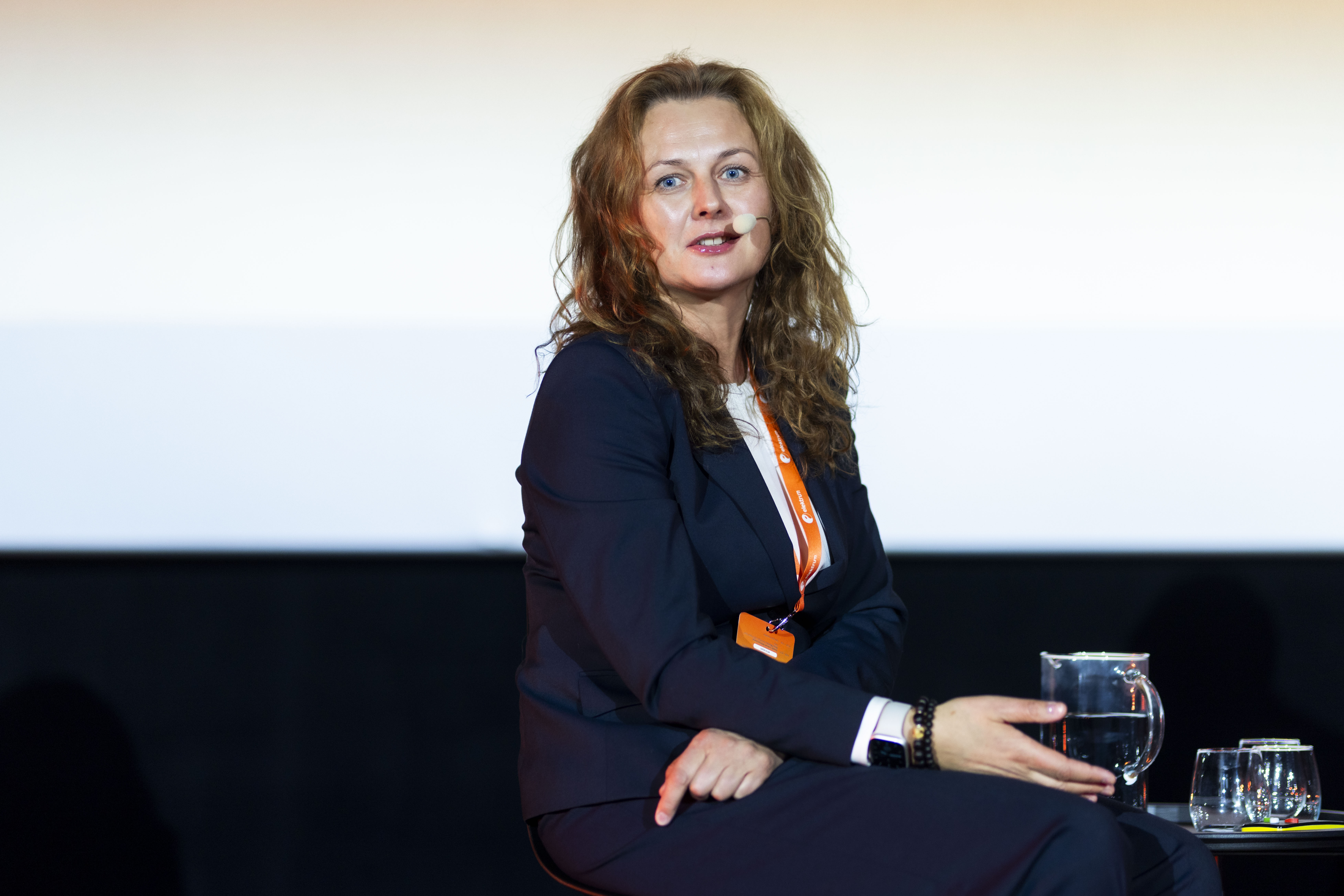
Rasa Sinkevičienė
“Business isn’t a competition where the outcome is clear-cut: you either win or lose. You either perform well, change, and adapt to the market, or… you don’t. There are no winners or losers – only those who manage to keep moving forward,” says Rasa Sinkevičienė, an alumna of Vytautas Magnus University (VMU) and CEO of “Autojuta”, a company specialising in the sale and service of new and used cars.
In our interview with the head of a company that has been operating for 30 years, we discuss mind-broadening studies, unpaid work, combining business and psychology, the formula for success, and pride in Lithuanian businesses.
Studies are not an instruction manual for life, but training for the mind
Rasa enrolled at VMU without any clear expectations. “I did well at school, so I had more than one option. At the time, the most popular choices were medicine, law, and economics. I couldn’t even consider medicine because I was afraid of blood, law seemed boring, and economics was a completely new field back then. So I decided to give it a try,” Rasa recalls.
When choosing to study Business and Management at VMU, she had no idea where that decision would lead her. But, as she says, that is not a bad thing. “I enrolled in my studies without knowing exactly what I would gain from them. Today, I can say with confidence that I don’t regret it at all. My studies were very interesting and taught me a great deal,” she says.
She emphasises that studies are not a fast track to a specific job. “Studies shape the way you think, broaden your outlook, and deepen your understanding of the world and of yourself. But no studies prepare you in such a way that you start a job after graduation already knowing everything. It just doesn’t work that way,” says Rasa Sinkevičienė, adding that the value of studies depends greatly on the individual’s own engagement.
“How much you learn depends largely on how much you want to learn. Nothing comes without effort. Even geniuses work very hard to achieve something,” she says.
Curiosity is an investment in yourself
Rasa is convinced that it is not only wide-ranging studies that are important, but also what you do outside lectures: “Taking part in the International Association of Students in Economics and Business (AIESEC) was incredibly valuable – we carried out projects and got involved in various activities that genuinely helped us grow.” She believes volunteering speaks volumes about a person: “When someone does work for which they are not paid, you see them at their best – how they work, what their values are, and what their character is like.”
Rasa is delighted that the connections she made back then still last to this day – she is still in touch with former AIESEC members and her coursemates, with whom she now works or collaborates. During her studies, Rasa also took advantage of VMU’s option to choose a minor study programme – in addition to her major in business, she studied psychology. “At first glance, they seem unrelated, but in reality, both business and psychology are about people. I found psychology truly fascinating: once you start to delve deeper into yourself, you begin to understand others better. It was only during lectures on counselling that I realised I couldn’t work as a psychologist after all,” Rasa laughs.
She is convinced that combining different fields helps you see the bigger picture, especially today, when everything is changing very quickly:
“When I enrolled at university in 1993, many things were still new and unclear. But it seems to me that we are now in a similar period of transition. Specialties are once again changing very rapidly. Five or ten years ago, IT seemed like a guaranteed future, but now we can see that demand and roles are changing – in some areas salaries are falling and people are being made redundant.”
Rasa says that university was a space where she could try as many things as possible. “When you’re curious, everything is interesting,” she smiles. During her studies, she attended German and Japanese language classes, and took an interest in Japanese society. “We had a visiting lecturer from Japan – it was really interesting. A different way of thinking, a different language structure… and through that you begin to realise that the world can be completely different.”
As an active student, she wanted to try everything that a university promoting the principles of artes liberales had to offer. On top of all this, she worked, did well in her studies, and received a scholarship. And although the workload was heavy, she still sees this experience as important today. “I really had to work hard. But I think that’s how it’s supposed to be. After all, studies are an investment in yourself – the more you take from them, the more you gain,” she says.
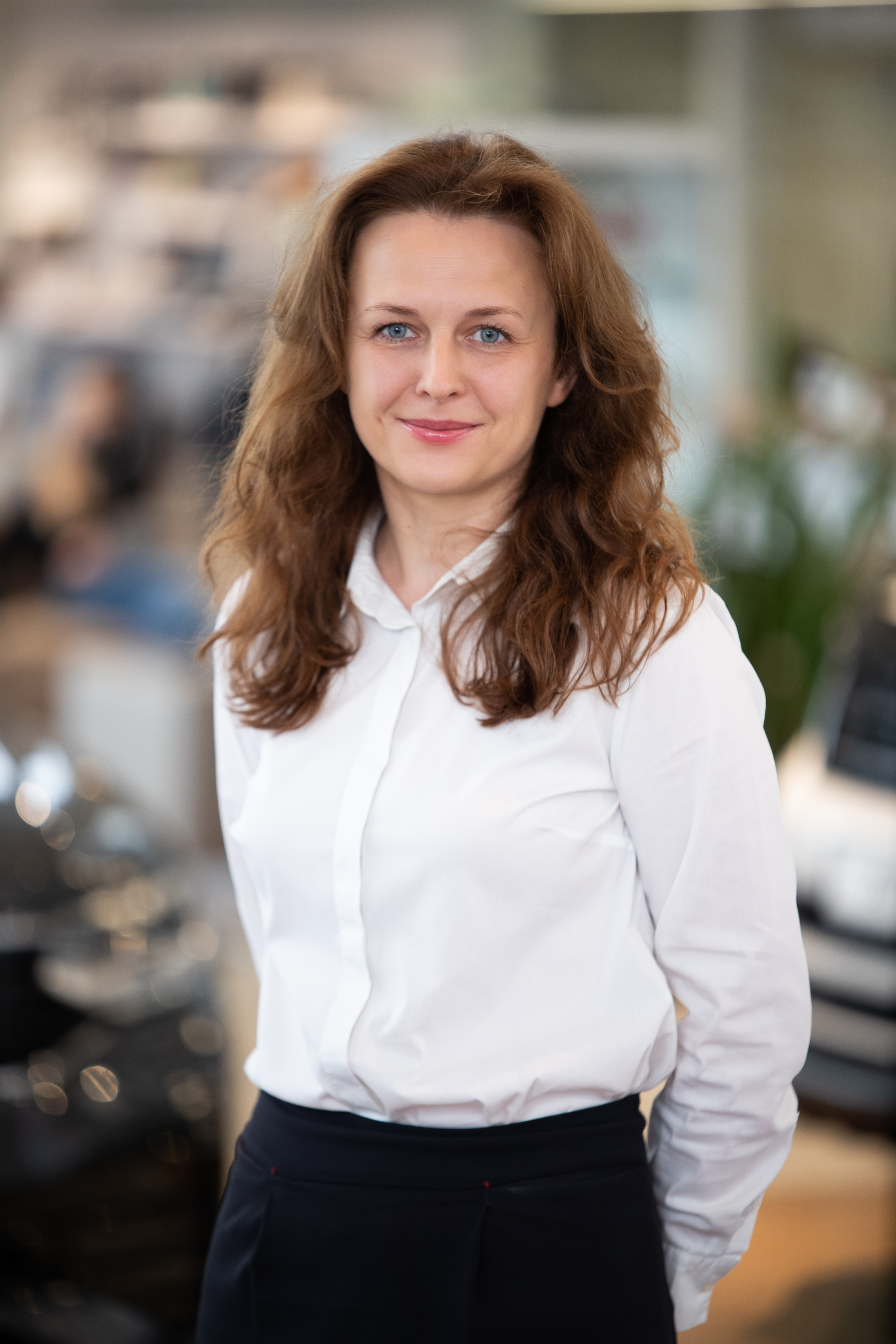
Rasa Sinkevičienė
Leadership is about working with people
Currently heading a company with nearly 200 employees, Rasa says she has been involved with “Autojuta” since its very beginnings: “It’s a family business, so I had the opportunity to watch the company gradually grow from just a few employees to its current size, and to contribute to that growth. As the company grew, so did I,” she says.
“I truly enjoy my work. I like working with people, seeing how they grow, improve, and develop, and observing the processes that take place between people – both employees and clients. It gets difficult at times, but I believe the same principles apply everywhere – alongside discipline, structure, and a clear system, you also need humanity, and the ability to communicate and find solutions,” says Rasa, explaining the nuances of leading a large company.
“What matters most is that the company employs people who are true specialists in their field. Whether they are managers, metalworkers, electricians, or car washers, the key is that the right person is in the right place, works responsibly, is motivated and able to cooperate. Then everything will run smoothly,” she explains.
She notes that during job interviews, people often say their goal is to become a director, to lead a company, or to have their own business, as this is what is commonly understood as a career. “A career is about being the best at something you genuinely enjoy,” Rasa explains.
“You can be the best car mechanic in the world – and that will be the pinnacle of your career if you genuinely enjoy the work. And yet there are so many unhappy people who lead companies or run their own businesses, but gain no happiness from it at all.”
Luck also plays an important role in business
When talking about business, Rasa Sinkevičienė says that alongside all efforts and strategies, there is also the element of luck.
“You have to understand the market you are operating in and what exactly you are doing, yet everything can change in an instant. You may be doing everything perfectly, and then a competitor appears in a neighbouring country selling the same product at a much lower price. And that’s it. The situation changes instantly. And you can’t really be prepared for that, because you don’t know exactly what you need to prepare for. Yes, you must follow trends, analyse them, prepare, and think about how to adapt to the market, but you can’t predict something like the COVID pandemic. It’s like an art form in itself – being able to deal with and adapt to unexpected situations,” Rasa says.
She describes the global COVID pandemic in 2020 as a major challenge for businesses. “I’m very proud of all Lithuanian businesses that adapted, endured, and in some cases even grew stronger. To me, it truly is a phenomenon – the amount of energy, strength, and ideas people have,” she says.
However, she also sees the current economic recovery as a potential risk for businesses. “Sometimes the opposite happens – when profits and salaries are rising, and you start to feel a bit too confident and successful, you become complacent. Then someone new comes along and overtakes you very quickly. That’s why it’s so important to stay alert and remain competitive. I believe Lithuanians still have that sense of hunger – that desire to improve and grow,” she says.
Numbers, artificial intelligence, and future solutions
When asked to describe the formula behind Autojuta’s success, the company’s head said that it is determined by the people who work there and the products they create. “We’ve always followed a fairly consistent growth policy and have never been particularly ‘aggressive’ – whatever we earned, we reinvested, and we didn’t focus on Excel spreadsheets, but simply tried to do our job as best we could. I believe that when you focus on the work itself, the numbers you want to achieve follow naturally,” says Rasa Sinkevičienė.
When the conversation turns to artificial intelligence (AI), a topic that is being discussed more and more frequently today, Rasa describes it as an opportunity rather than a threat. “I believe that AI will change many things in the market and have a significant impact, but I see it as something positive, as an opportunity, although it’ll take a long time before we learn how to use this opportunity properly. I’d say that AI can be a good or bad thing, depending on how it’s used,” she says.
“In general, a lot in life depends on a person’s mindset, attitude, and beliefs. Some people never seem to have problems, while for others they are constant. And often this is a problem of one’s own making. If you think that something bad will happen, it will,” she says, adding that when a problem arises, you should not dwell on how unfortunate it is, but instead think about how to move forward and solve it.
Rasa advises young people to take as much as possible from life and from their studies: “We were often told that knowledge is no burden to carry. You may forget facts, but the ability to think, to organise information, and to make decisions remains – and that’s what matters most.”
“Be curious, view things from a broader perspective, and, most importantly, follow your heart. Do what matters to you and what interests you, not what you ‘have’ to do, and you will surpass those who only work for money. Don’t be afraid to put in a lot of effort, to volunteer, to help others, and to do things simply for a ‘thank you’. After all, people are truly happy when they are able to be useful to others,” she maintains.