
Director of VMU Institute of Foreign Languages Dr. Teresė Ringailienė: Foreigners are Intrigued by Our Language
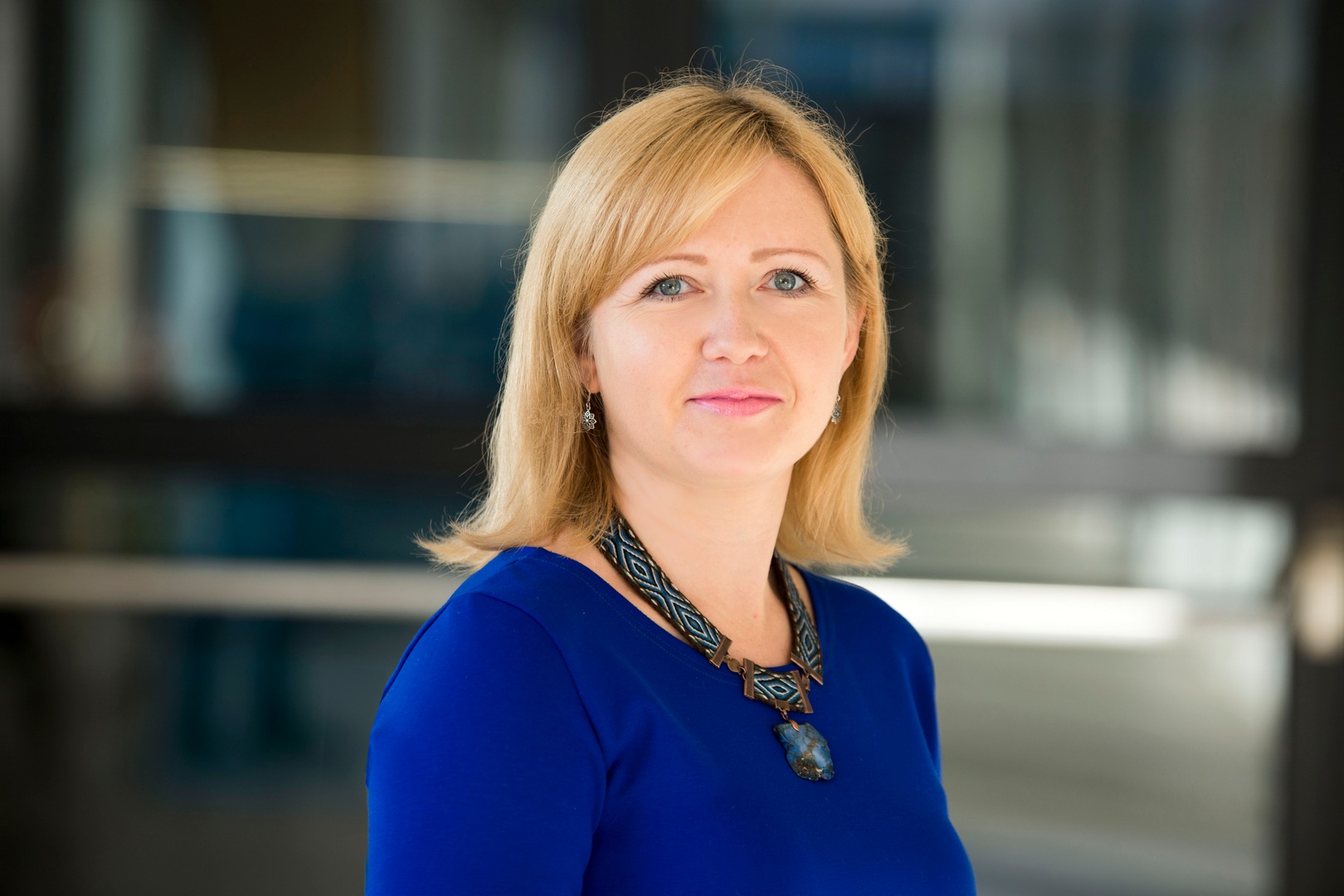
“No technology can replace human interaction, regardless of how fascinating someone may find robots or avatars. Perhaps you’ve attended a show where the singer says a few words in the audience’s language and it causes a massive ovation: the atmosphere changes immediately. According to Nelson Mandela, when we speak in someone’s native language, it goes not to their head but to their heart. So the impact is completely different”, English philologist, interpreter, Director of Vytautas Magnus University’s (VMU) Institute of Foreign Languages Dr. Teresė Ringailienė says, highlighting the importance of languages and human connection. For her activities promoting multilingualism, the Transform4Europe Alliance has nominated Dr. Ringailienė in the Heroes of the Year Awards.
In the conversation, VMU graduate, longtime lecturer, and author of Learn and Speak Lithuanian, a textbook for learning Lithuanian as a foreign language, shared her thoughts on the role of technologies in language learning, the appeal of working with languages, the enriching language initiatives of VMU, and various activities aimed at promoting multilingualism not just in Lithuania but in other European universities as well.
The philologist agrees that today languages and the humanities in general are a bit undervalued: this is reflected in the allocation of finances for the state-funded student vouchers.
“I am certain that languages are an inseparable part of education, because they are far more than words or grammar rules. They also encompass knowledge of various cultures, cultural norms, the history of countries, folklore, nonverbal communication and so on. We can’t learn a language without culture and we can’t understand another culture without knowledge of its language. Also, in today’s world, we should highlight the importance of intercultural language. For me, working with languages is inseparable from working with people: this type of work simply cannot get boring”, the Director of VMU Institute of Foreign Languages says.
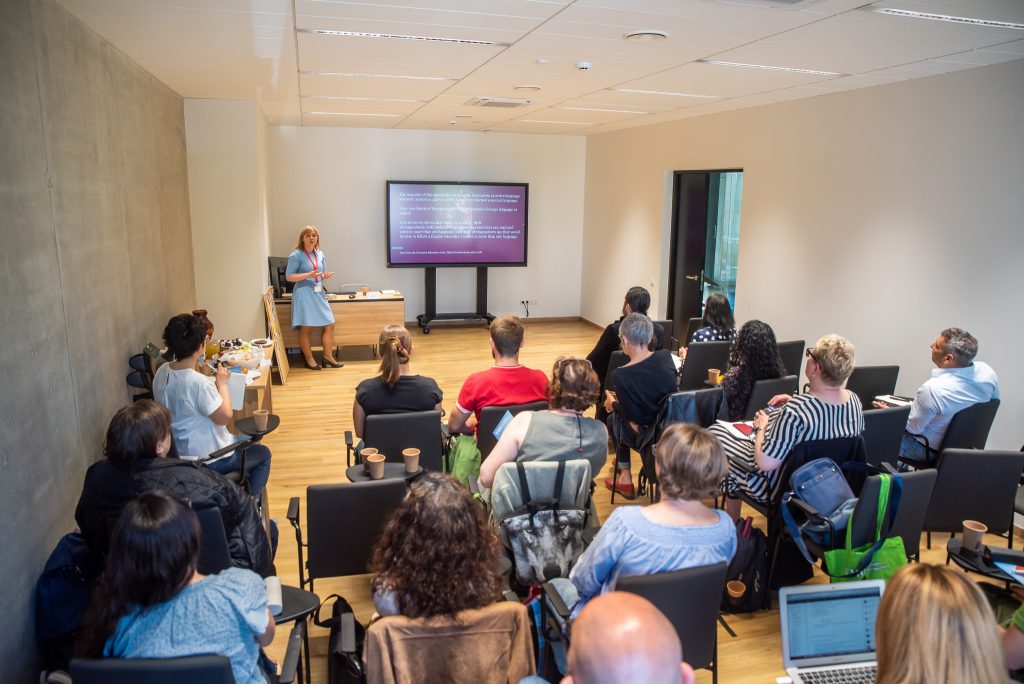
Transform4Europe’s Blended Intensive Program for lecturers
Technologies Are Drivers of Change
Discussing the role of artificial intelligence and other technological innovations in language learning, the interviewee notes that they are changing the entire world. However, it’s important to use technologies wisely and responsibly.
“We can already use many apps and tools, with new ones emerging almost every day, or simply talk with AI and practice languages. The predictions are exciting: virtual reality tools capable of simulating realistic situations, inexhaustibly patient robots that help one to learn, and technological possibilities to gamify learning, thus making it even more engaging… Of course, technology has the huge advantage of personalized learning and the ability to learn anywhere and anytime”, Dr. Ringailienė discusses the strengths.
Technologies are already motivating translators to change as well: machine translation is improving and is increasingly accurate even when translating into Lithuanian language, which features complex grammar. Because of this, translators sometimes take on the role of post-editors who check and unify an already translated text. However, this doesn’t mean that automatic translators can replace human work, especially when translating less technical texts.
AI Can Praise, But Only a Human Can Inspire
“At least for now, only a human can perceive linguistic nuances, indirect meanings, artistic language, and cultural implications. Only a human can decide whether a translation truly matches the original and whether ChatGPT “hallucinated” something. And only a human can assume responsibility for, say, an improper translation, or identify whether it is a natural, everyday language”, Dr. Ringailienė points out.
She assures that even though nowadays everyone has access to technologies that enable easy translation of desired texts or conversations, direct human interaction remains highly important in learning. For instance, AI may commend someone for a text they’ve written, but only a teacher or a lecturer can truly inspire, motivate, and be an example to follow. Direct connection is no less important in work and business relationships as well.
“We see that important meetings both in business and politics are held in person. Thus, maybe it’s very idealistic, but I’d like to believe that human connection and face-to-face conversations will not lose their importance, regardless of how advanced our technologies will be and how much easier they make our lives and learning”, hopes the Director of VMU Institute of Foreign Languages.
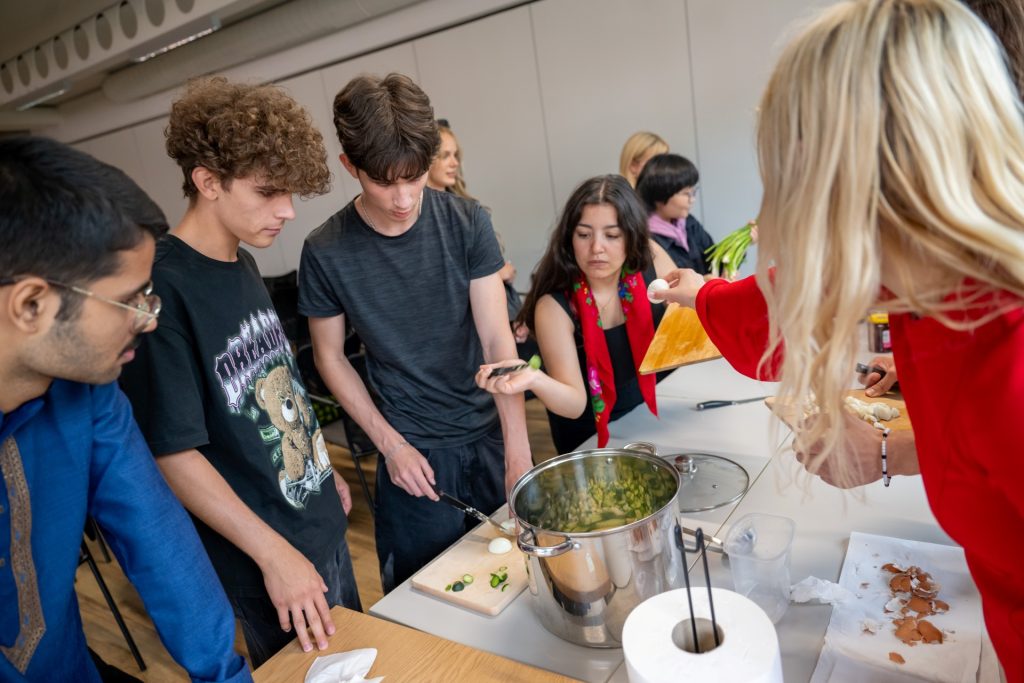
Participants of Lithuanian Language and Culture Course are making Šaltibarščiai (cold beet soup)
More and More Foreigners Are Learning Lithuanian
At Vytautas Magnus University, the philologist teaches Lithuanian as a foreign language every semester. The popularity of the course has increased significantly in recent years: in the autumn semester alone, no less than sixteen groups were taught Lithuanian at various levels. Dr. Ringailienė is also one of the lecturers who teach intensive Lithuanian language courses for foreigners in the summer and winter. This initiative, which has been running for 26 years, draws in a large crowd of participants who wish to learn Lithuanian language and get acquainted with Lithuanian culture.
“Foreigners find our language interesting and unique, even though it raises certain challenges at times. Some may find it hard to pronounce sounds like l, r, or v, others struggle with cases or grammatical gender, and still others are surprised by words that are completely different from other languages. Of course, knowledge of other languages helps one to learn Lithuanian. Or, in the words of my former student, Lithuanian offers a great jumping-off point for learning other languages, because it has everything: cases, grammatical gender, number, verb conjugation, tenses, participles…”, says Dr. Ringailienė.
In her view, in spite of arising difficulties, everything can be overcome with motivation: for instance, some members of mixed-nationality families learn Lithuanian language because of their children, others do so while pursuing a connection with their Lithuanian roots, the language, culture, and history of their grandparents or great grandparents.
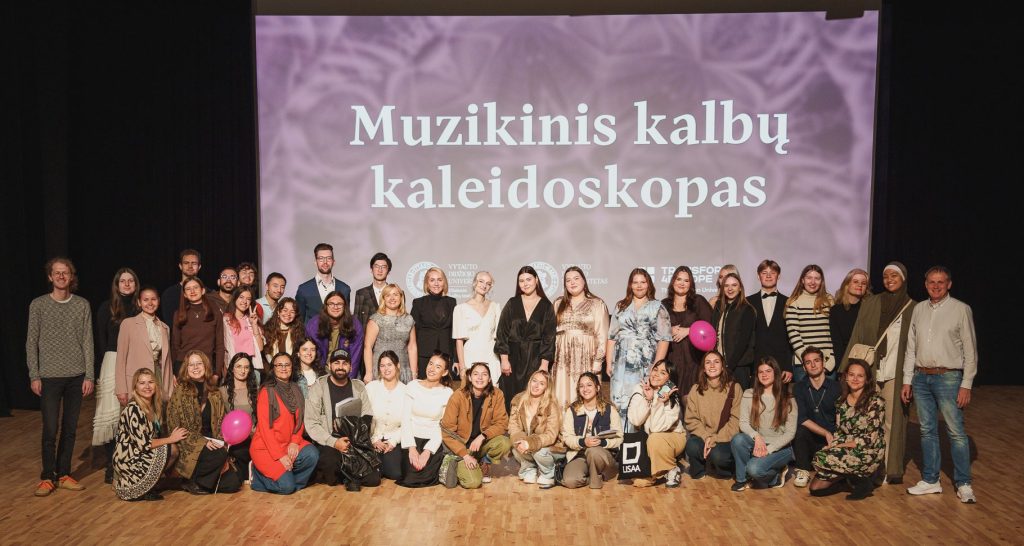
European Day of Languages at VMU Institute of Foreign Languages
Impressed by Wide Range of Languages and Other Initiatives
VMU is a member of the Transform4Europe Alliance (T4EU), which unites eleven universities of the continent: they organise various initiatives, joint projects, student and staff exchange, as well as events that help the communities to get to know each other. According to Dr. Ringailienė, VMU stands out in the entire alliance thanks to its wide range of languages: both the entire community as well as the university’s guests are delighted by the possibility to choose from around thirty different languages, which can be learned by students, regardless of their chosen study program, by the academic and non-academic staff, and by the public.
Apart from formal language learning, the university also offers other opportunities and events. The VMU Institute of Foreign Languages organizes the annual European Day of Languages, Mother Language Day, and online “language tastings” introducing less commonly taught languages. VMU also hosts blended intensive programs (BIP) that are primarily intended for T4EU students and lecturers. The Director of the Institute of Foreign Languages notes that a BIP organized in 2025 included a multilingual concert marking the European Day of Languages. Songs in as many as twelve languages of the alliance were performed by students of VMU Music Academy, with native-speaker colleagues from other T4EU universities helping them prepare for the concert.
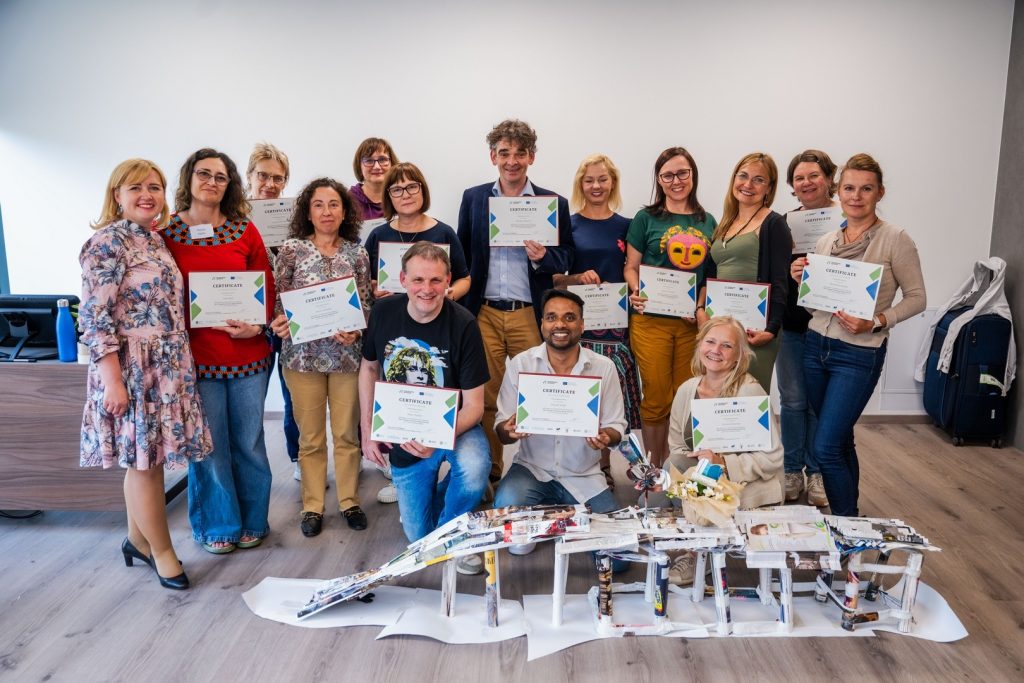
Transform4Europe’s Blended Intensive Program for lecturers
Learning Lithuanian Over Breakfast
Together with other Lithuanian institutions, VMU also organized Lithuanian language courses for war refugees from Ukraine: A1 and A2-level courses introducing the Lithuanian language, culture, history, and implementation of human rights, as well as a course for families with children of various ages and handicraft activities during which Lithuanian was learned. In this project, Dr. Ringailienė led Lithuanian language sessions integrated with cooking. Last year, the Director of the Institute of Foreign Languages, together with colleagues, developed a learning resource for Ukrainians studying Lithuanian at A1-A2 levels, which received one of the VMU Quality Awards for the most advanced community ideas.
During T4EU Week in Kaunas, members of the alliance universities also had the opportunity to take part in another initiative by Dr. Ringailienė: sessions titled “Lithuanian for Breakfast”, where participants learned Lithuanian while having breakfast, tasting honey, curd cheese, black bread, and other Lithuanian food products. “Probably nothing brings people together like language and food”, the interviewee is convinced.
The philologist also led a working group that prepared a national professional development program for language teachers currently being implemented, titled “Multilingualism and Cooperation in the Language Teaching and Learning Process”.
In recognition of Dr. Ringailienė’s active involvement in implementing these and other widely recognized language initiatives, the Transform4Europe alliance nominated her for the Heroes of the Year Awards, which honour the most memorable achievements of the year among all eleven alliance universities.
“I am very grateful to my colleagues at the VMU Institute of Foreign Languages and the T4EU alliance for their support and help in implementing ideas and initiatives. It is good to feel encouragement, to consult with others, and to generate new ideas together. For the excellent ‘bonding’ of the T4EU linguists’ team, special thanks should go to Dr. Peter Tischer, head of the Language Centre at Saarland University, thanks to whom we are all not only colleagues but also friends”, says the director of the VMU Institute of Foreign Languages, adding that more initiatives are planned at the university in the future, such as a summer school for philologists and language enthusiasts, multilingual board game evenings, and other innovations.