Space Innovation Expert Eigirdas Sarkanas: “Technologies Developed for Space Sooner or Later Make Their Way Back to Earth”
“Technologies developed for space sooner or later quite literally make their way back to Earth. Solar panels, scratch-resistant lenses, infant formula, artificial limbs, and water filters are just a few examples. And this is one of the main arguments in response to those who ask: “Why invest in space when we already have countless problems here on Earth?” says Eigirdas Sarkanas, an expert in space technology, innovation, and policy at the Innovation Agency’s Space Hub group.
In our interview with Eigirdas Sarkanas, we discuss space in our everyday lives, Lithuania’s space sector, and his studies at Vytautas Magnus University (VMU), which fostered openness to change and personal responsibility.
It may come as a surprise to many that Lithuania has not only an agricultural sector, but also a space sector. What does it consist of, what is its current situation, and how does Lithuania compare in the global context?
People are most surprised to hear that satellites are manufactured in Lithuania. This is something we are particularly proud of in our space sector. The story behind this is inspiring: more than 12 years ago, a small group of students came up with the idea of building the first Lithuanian satellites. With the support of the state, universities, and space enthusiasts, the idea became a reality – it marked the beginning of NanoAvionics, a company which continues to operate very successfully and is recognised worldwide.
In addition to satellites, Lithuania has a strong and globally recognised laser sector, which is also applying its solutions in the space field. For example, this summer one company, in cooperation with the University of Vienna, launched its laser into space, designed to perform a quantum computing experiment. All these solutions and technologies compete globally and strengthen Lithuania’s reputation as a technologically advanced and innovative country.
Do Lithuanian space innovations prove useful on Earth?
Absolutely. There are companies in Lithuania that use satellite data to develop solutions for monitoring the quality of water bodies and agricultural fields. It’s possible to identify the crops that farmers are growing, assess their quality, and establish whether they lack water or chemical nutrients. It’s also possible to assess the condition of forests. Another important point is that we have new technologies currently under development that have the potential to become breakthroughs – such as laser communication technology, which is significantly faster and more reliable than radio communication.
We also have systems engineering solutions that, using artificial intelligence, can not only reduce the preparation time for a space mission by at least half, but also ensure that systems operate reliably during the preparation stage, rather than only once a satellite is already in space. Finally, we have a company developing next-generation food for astronauts – it is considerably lighter and more compact, yet contains all the necessary nutrients and vitamins for the human body.
Space is about more than just astronauts on space stations and the Milky Way – what space innovations do we use in our everyday lives without even realising it?
The simplest example is GPS. Even GPS is usually understood only as a means of determining location so that we can get from point A to point B. However, GPS satellites (or Galileo, in the case of Europe) are critically important for accurate and synchronised timekeeping. If time synchronisation were disrupted, data and energy transmission would be affected – people could temporarily be left without electricity or internet access, the financial system would be disrupted, and we wouldn’t even be able to withdraw cash from ATMs.
Technologies developed for space sooner or later quite literally make their way back to Earth. Solar panels, scratch-resistant lenses, infant formula, artificial limbs, and water filters are just a few examples. There are dozens of such technologies, and this is one of the main arguments in response to those who ask: “Why invest in space when we already have countless problems here on Earth?”
Have you dreamed about space since childhood?
As children, we usually want to become police officers, doctors, or firefighters – these are the typical and most visible professions at that age. I don’t remember what my dreams were, but like many children, and later teenagers, I didn’t think too far ahead and didn’t have a clear goal of applying for a particular field of study. I did reasonably well at school and tried to study hard enough to secure a state-funded place.
Since I’m from Jonava, my aim was to enrol at a higher education institution in Kaunas and be closer to home – at the time, I didn’t want to step outside my comfort zone. However, I pursued tuition-free studies not because I had no other options, but because I didn’t want to be dependent on my parents. In hindsight, I’d say that I had a certain life scenario in my head, where finishing school and entering university would bring much greater independence and, more importantly, bring a sense of accountability to myself.
Why did you end up at VMU, and why did you choose social policy?
On the one hand, it was somewhat by chance, as social policy was not at the top of my list of priorities – I was also considering law and psychology. On the other hand, at the time it was still a relatively new study programme, and the very concept of social policy seemed interesting and fairly unfamiliar, which naturally caught my attention.
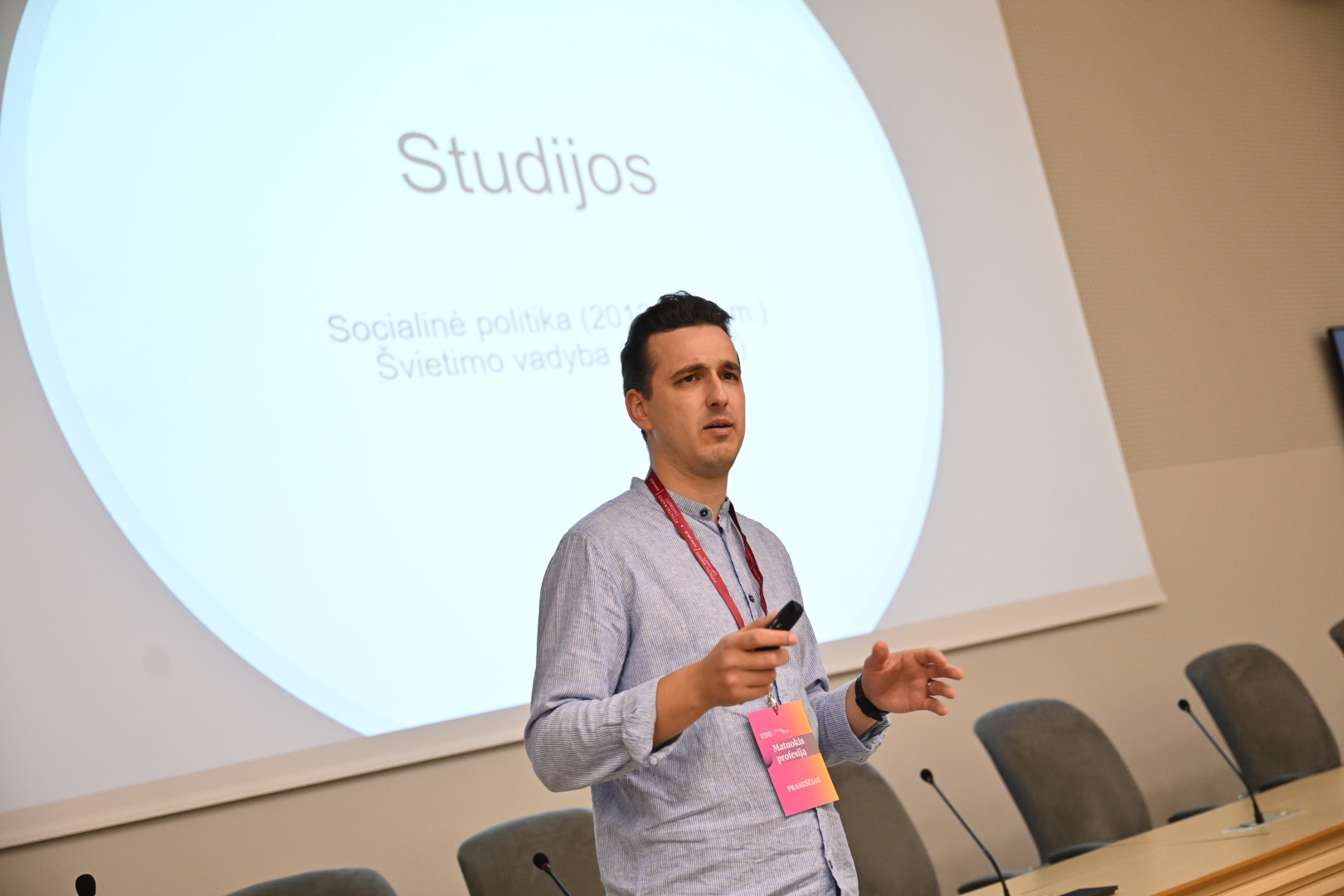
What attracted me to VMU was its flexibility. First of all, the flexibility of the studies and the artes liberales principles, and secondly, the relationship between teachers and students, which was very open and more collegial than hierarchical. This flexibility has also helped me in life, as I understand that you have to be open to change, adapt to it, and learn new things that at first glance may seem completely unrelated to what you are currently doing.
You were President of the Student Representative Council at VMU and later President of the Lithuanian National Union of Students. Do you think today’s students are different from those in your day?
It doesn’t seem so. Most students study and party, and prepare for assessments and exams the night before. As before, students live in dormitories, have to work to support themselves, and are one of the driving forces of civil society.
That said, we did witness a major shift during the Covid pandemic, which fundamentally changed the model for implementing studies and brought negative consequences due to the reduced face-to-face contact. We are now seeing another turning point with the use of artificial intelligence, which is also transforming the teaching and learning process. The concept of the student itself has remained the same, but learning tools, opportunities, and crises naturally bring about change.
How much space is there in your daily work and life? Have you visited NASA? Do you have a telescope at home?
Since space is also a hobby of mine, it naturally plays a significant role in my life. I talk about space with my children, we browse through and read various books, and I listen to quite a few podcasts or watch content about trends and the history of the space sector. Occasionally, I also organise space-themed activities for primary school pupils, drawing on experience I gained during my traineeship in the United States.
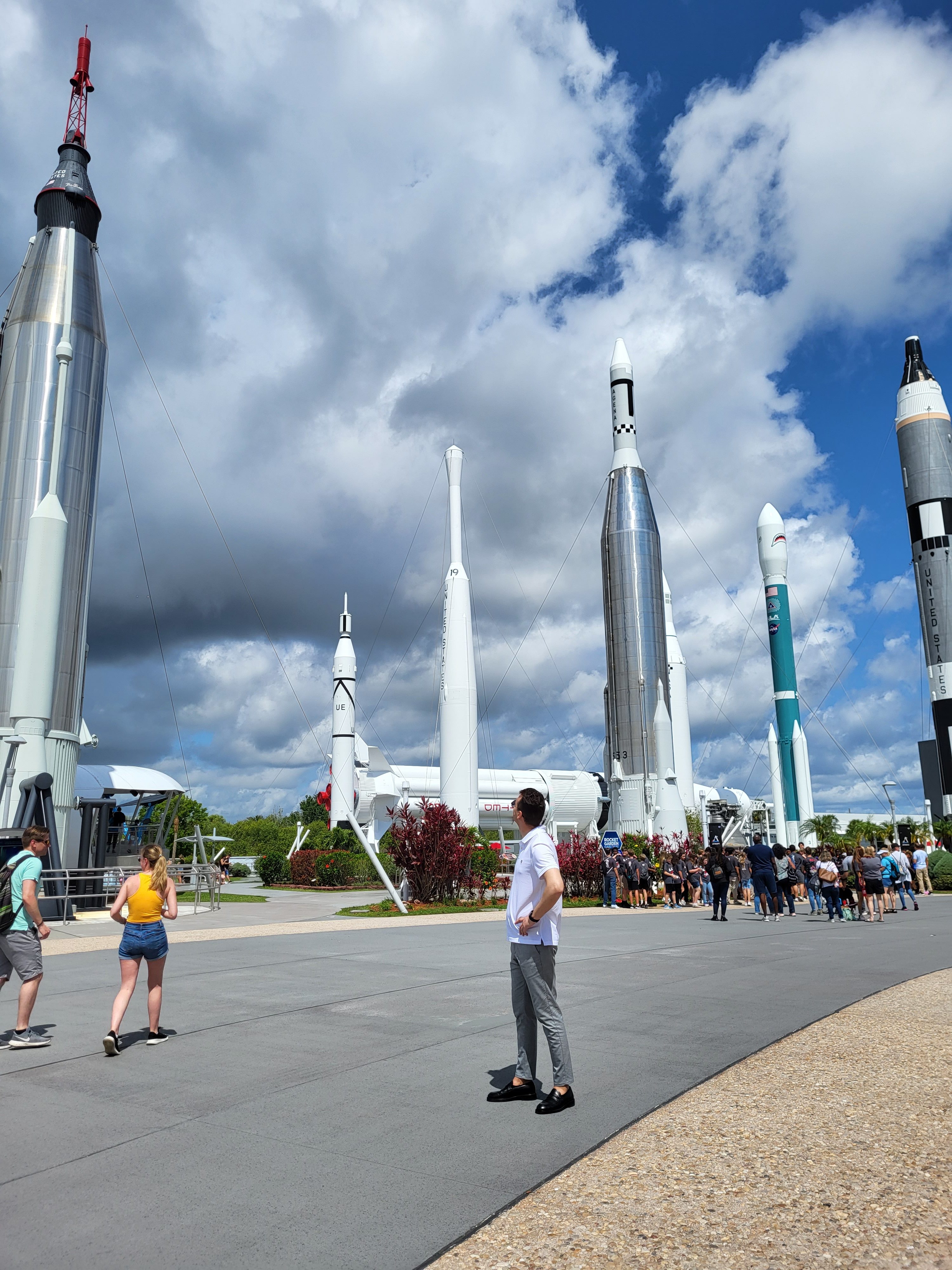
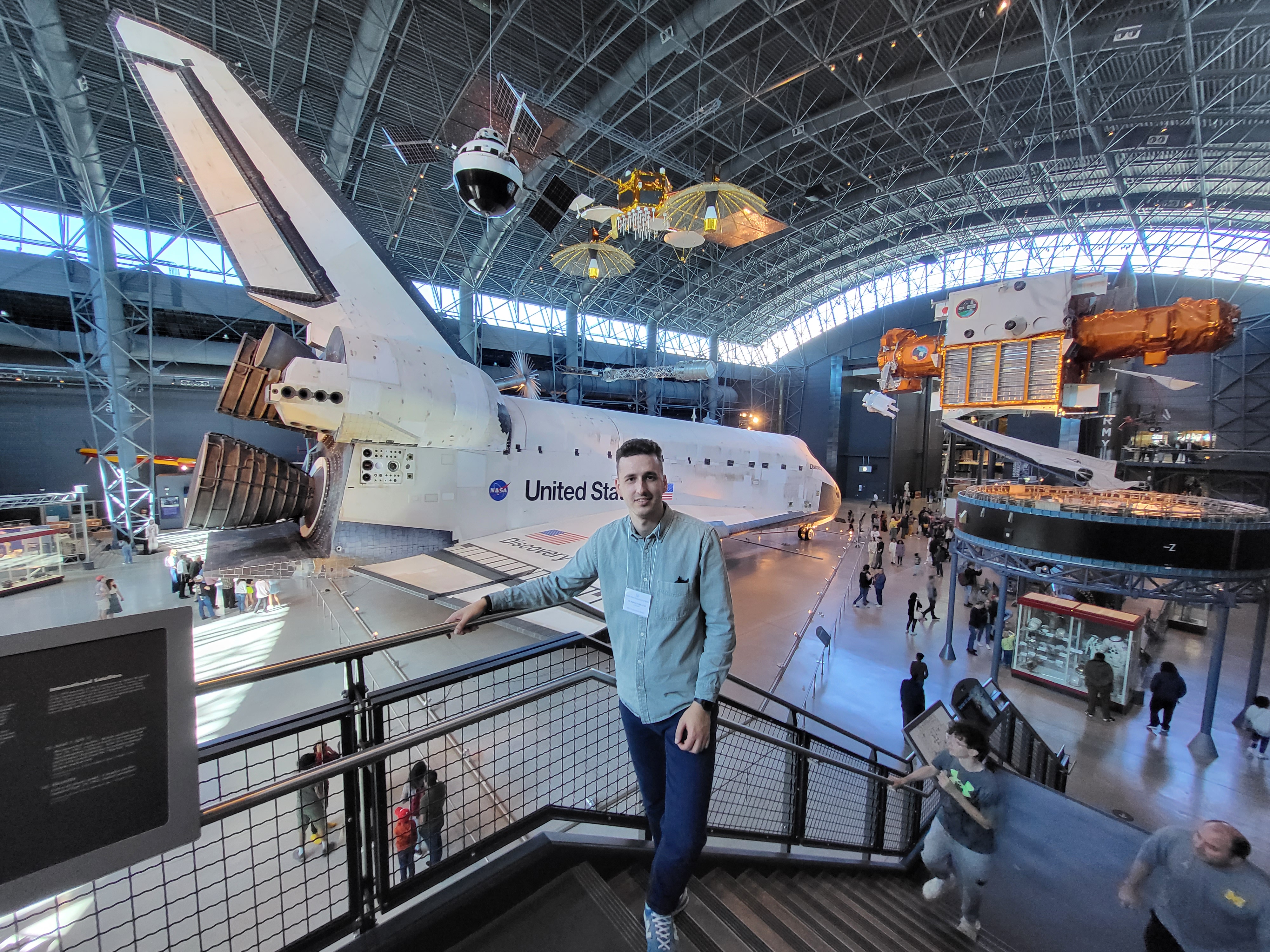
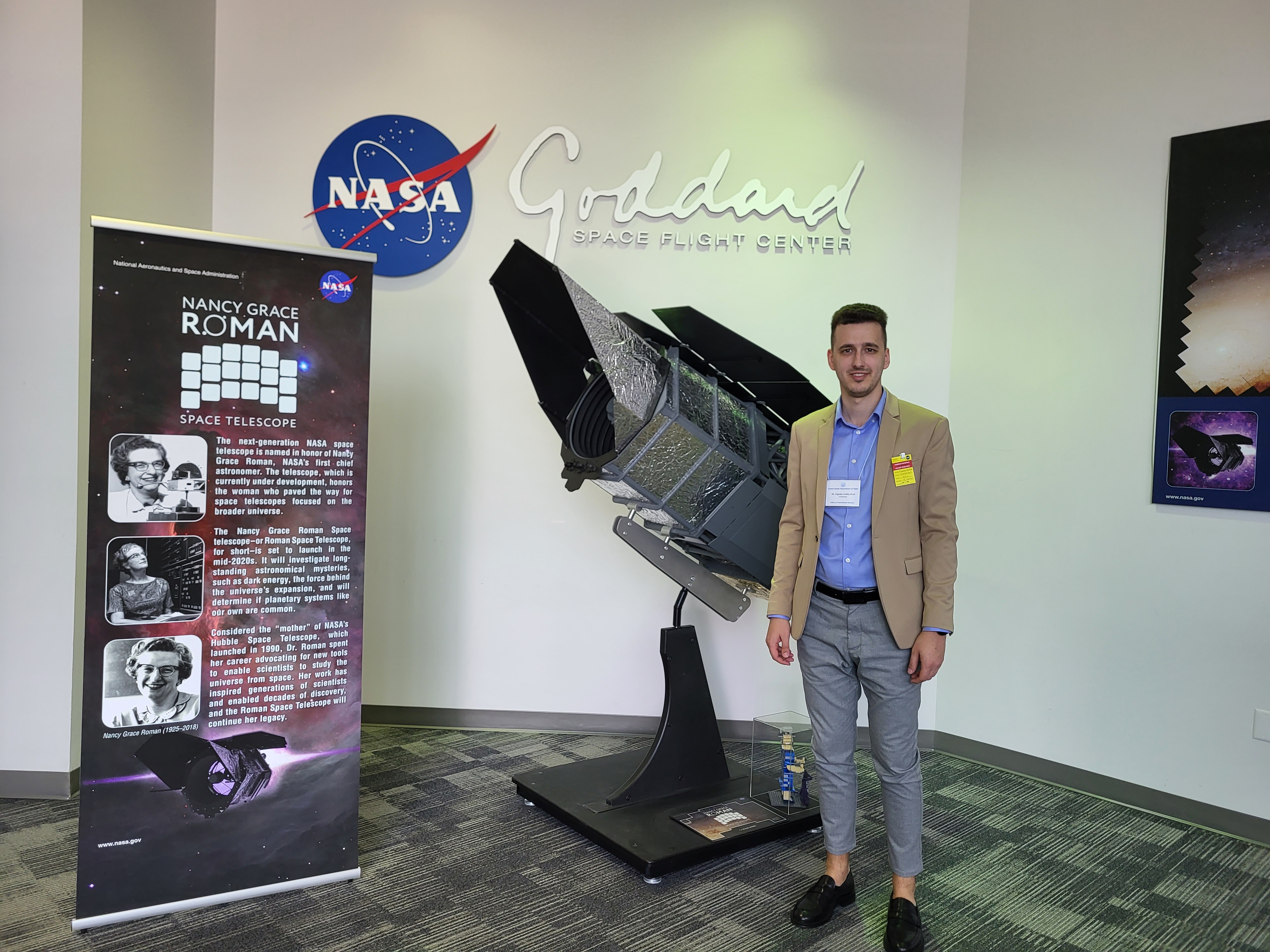
Yes, I’ve been to NASA – I visited the Goddard Space Flight Center in Washington, DC, the Jet Propulsion Laboratory (JPL) in Los Angeles, and the Kennedy Space Center in Florida. I don’t have a telescope at home, though.