
Chairman of the Kaunas Regional Court Marius Bartninkas: “Law Is Not Mathematics, Where Two Plus Two Equals Four”
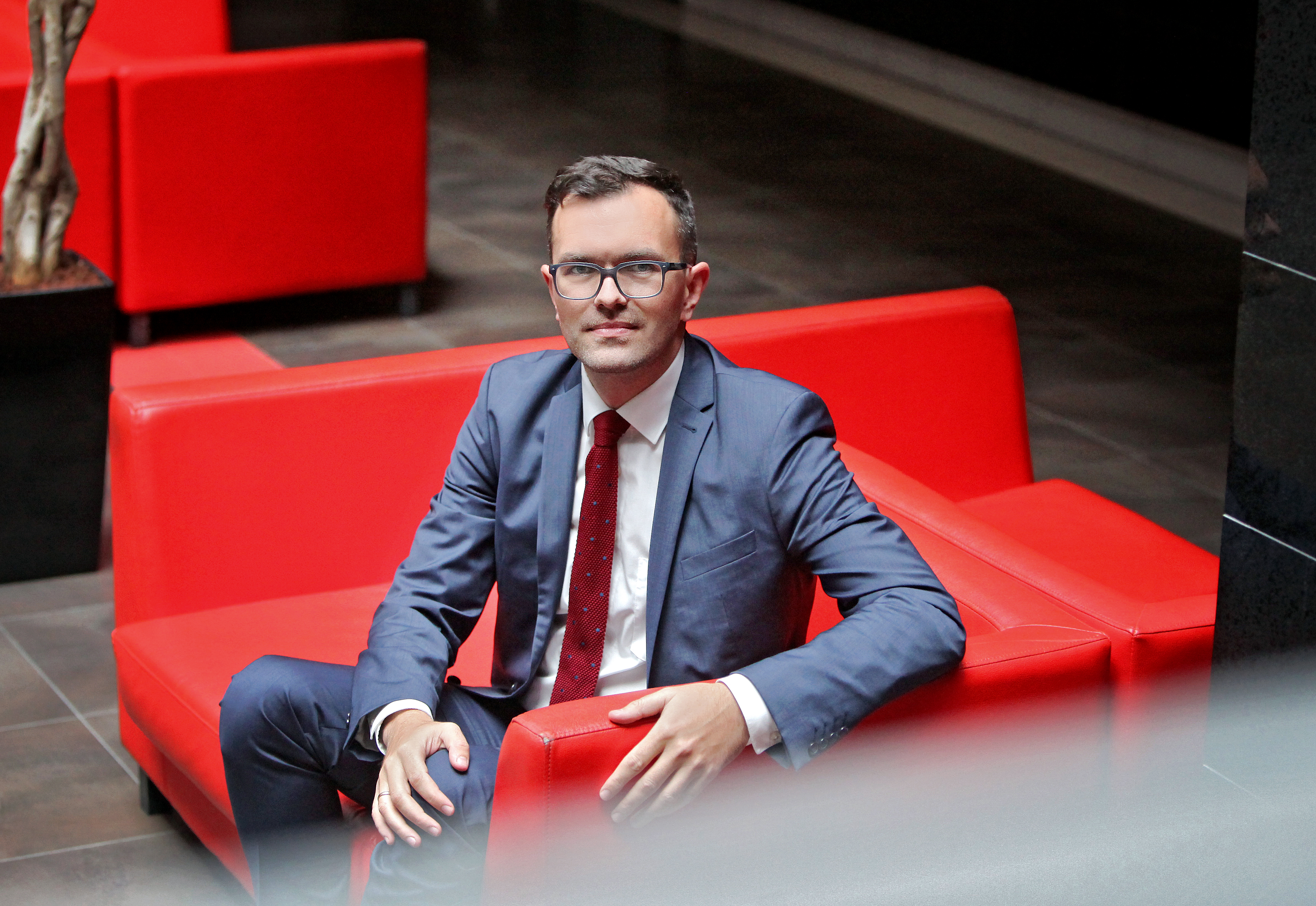
“Could we really, and would we want to, entrust artificial intelligence with resolving disputes? Law is not mathematics, where applying a formula yields a single, clear answer, as we all know that two plus two equals four. What formula should be used to decide which parent a minor child should live with? Can a computer impose a sentence on a person who has committed a crime?” asks Marius Bartninkas, Chairman of the Kaunas Regional Court, when speaking about the use of artificial intelligence in judicial proceedings.
In an interview with Marius Bartninkas, a court chairman, a graduate of Vytautas Magnus University (VMU) and now also a VMU doctoral student, we discuss how he chose his career path, why the work of a judge is similar to literary analysis, and what future awaits the courts.
Marius, did you end up becoming what you wanted to be as a child?
I must admit I’m not one of those people who knew exactly what they wanted to become while still at school. I clearly remember leafing through the magazine Where to Study in my final year at school and trying to draw up a list of the most interesting study programmes. I would even say it was more of a process of elimination. I wasn’t very good at the arts, and the natural sciences didn’t interest me. On the other hand, I was drawn to history and did well in mathematics and foreign languages. There was no doubt about one thing: education opens up opportunities for self-realisation. The more effort you put in, the more chances you have of finding your place in life.
How did you end up at VMU?
When applying for university, I chose several fields within the social sciences. I was accepted to three study programmes at different universities, ranging from business administration to political science. At the time, it felt as though choosing one meant making the most important decision of my life. The stress was enormous. Looking back from today’s perspective, it seems a bit funny now: the world has changed so much that there are now countless professions that didn’t even exist back then, and changing careers has become entirely normal.
Among the most important reasons for my choice were not only the Public Administration study programme itself, but also several aspects related to the study model offered by VMU: the opportunity to learn English, which had not been available at school, as well as the University’s approach based on the principles of artes liberales, which made it possible to acquire a broad education not focused on a single narrow field. When I entered university, I didn’t speak English at all, yet after two years of intensive study, I went to the United States in the summer on the Work and Travel programme, fully confident in my ability to communicate in English.
In my third year of studies, I had to choose a study field – public administration or political science. I chose public administration, and although I had doubts about my choice at the time, the future has shown that the knowledge gained always comes in handy. Currently, alongside my legal work, I also do administrative work in a public sector institution, so I would say that I work in both of my acquired specialties. The moral here could be that there is no need to doubt your decisions or dwell on your mistakes; instead, you should trust yourself and continue to look for new opportunities.
What prompted you to turn to the Faculty of Law?
Midway through my bachelor’s studies, I found myself facing an internal dilemma about my chosen study programme and began asking myself: and then what? I started exploring options for master’s studies, and the programmes offered by the Faculty of Law caught my attention. I was particularly drawn to the distinctive study format: legal education was offered to students who had pursued a different field in their bachelor’s studies; moreover, the master’s programme lasted three years, spread over eight semesters (with studies continuing through the summer), which made it reasonable to expect that it would provide everything needed to become a professional lawyer. From the very first semester, I found the studies engaging, and I realised that I had found my niche.
You have said before that every person’s motto to live by should be: “there are no small problems, and every fight for justice is worth all the effort.” Do you remember a time during your studies or in life when you felt a sense of injustice and wanted to fight for the truth?
Let me use an analogy: flowers grow in a well-tended environment, while weeds grow in an untended one. The same applies to the problems of our shared life in society. If problems are not addressed, they tend to grow. This is what makes the legal profession so appealing, because a lawyer is someone who helps. If you turn to a lawyer in time, they help you avoid problems; if you do so a little too late, they help you resolve them. It’s difficult to recall a specific situation, but the realisation of how meaningful a judge’s work is in striving for justice led to my desire to try my hand at the court system.
You return to the Faculty of Law to teach or to meet with students. What is the most important thing you want them to take away from their studies – something you yourself have come to understand after progressing through so many stages of your career?
I return as a student myself, as I am currently pursuing doctoral studies, so I can clearly see the wide range of opportunities the Faculty of Law offers – from an excellent library and exchange programmes to various means of self-realisation. When it comes to legal practice, it is crucial not only to possess a body of specialised knowledge, but also to be able to apply it in practice.
I often ask students which school subject the work of a judge most closely resembles. The answer is literary analysis in a literature class. First, one must read the text, that is, be able to listen carefully and gather all the information needed to resolve a dispute. Of course, understanding the context is essential: in literary analysis, this includes the author, the historical period in which the author lived, and so on; in the work of a judge, it means legislation and how it has been applied in previous case law. Then one must identify the core idea of the text or the central legal issue. Finally, it is essential to be able to justify the outcome reached in a reasoned manner, while presenting one’s thoughts clearly and coherently.
A judge’s greatest enemy is prejudice. Today, we see many people in the public sphere confidently expressing opinions on a wide range of issues, often without examining the actual situation in detail. Attention to detail, critical thinking, and the ability to articulate ideas clearly are the key competencies every lawyer needs, and attention must be paid to developing them during studies. At the same time, we must not forget fundamental human qualities such as integrity and empathy.
How do you see the future of Lithuania’s courts? What challenges do they face, and what opportunities lie ahead – has artificial intelligence already been implemented in the courts?
We have agreed to live in a democratic society, and one of the core principles of democracy is the rule of law. In other words, it is essential to follow rules and abide by the law. The main enemies of the rule of law are authoritarianism, arbitrariness, populism, and propaganda. The courts, as one of the three branches of state power, stand guard over the rule of law by ensuring justice. For this reason, the independence of the courts, the competence of those who work within them, and their ability to respond to the challenges posed by a changing environment are of paramount importance.
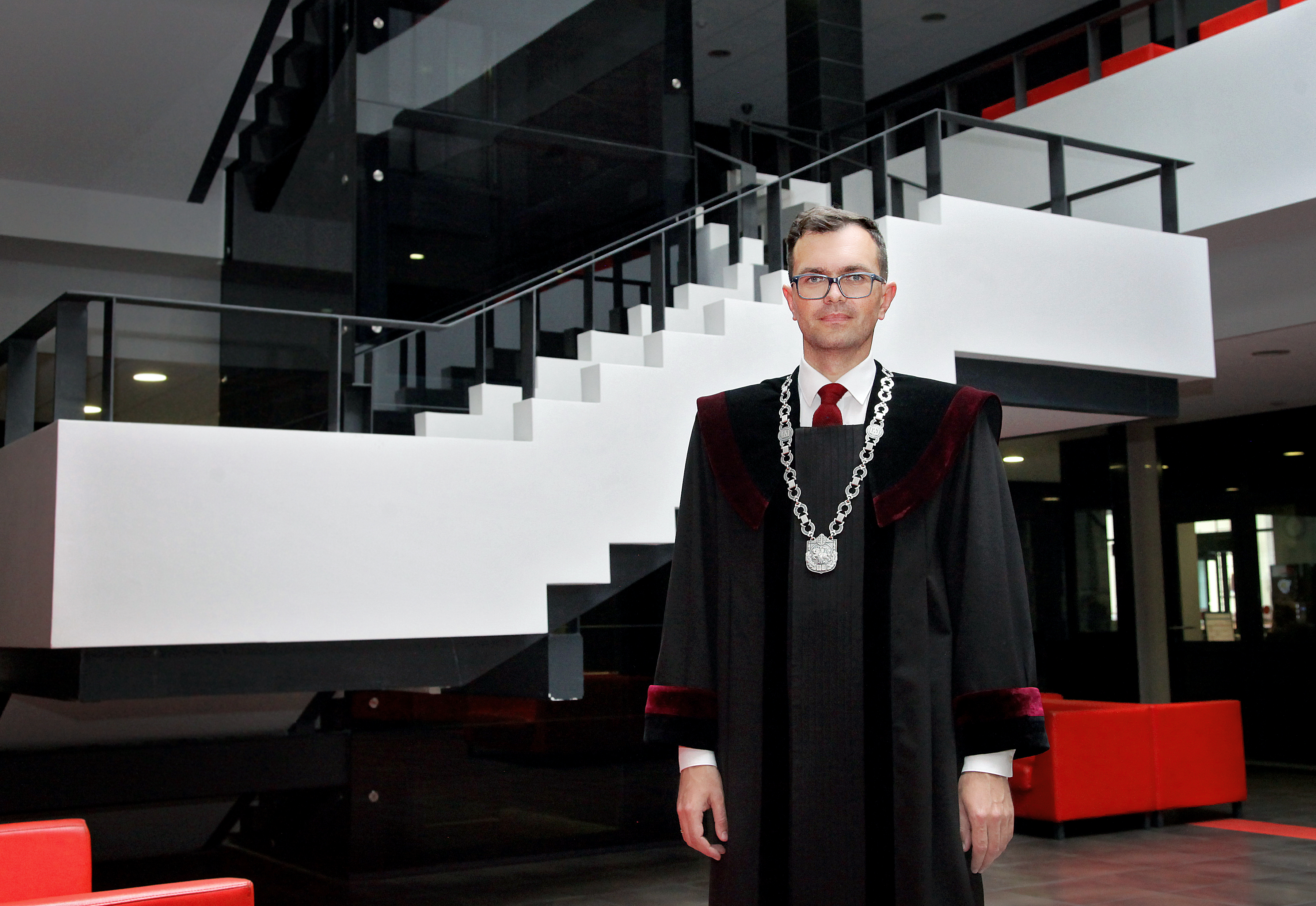
Marius Bartninkas
When discussing artificial intelligence, the question is often raised as to whether it can replace humans. I don’t see such a threat; I view artificial intelligence primarily as a tool that expands our capabilities. In the courts, it helps to collect and systematise information more quickly and to draw attention to particular aspects of an issue that has arisen. But could we really, and would we want to, entrust artificial intelligence with resolving disputes? Law is not mathematics, where applying a formula yields a single, clear answer, as we all know that two plus two equals four. What formula should be used to decide which parent a minor child should live with? Can a computer impose a sentence on a person who has committed a crime? What algorithm could determine that an employee’s dismissal was unlawful?
Artificial intelligence can assist and simplify decision-making procedures, but it cannot replace human judgement when it comes to the dilemmas of social life. At the same time, the ability to effectively use the capabilities of artificial intelligence is another critically important competence in every profession, including the legal field.
Do judges sleep soundly at night? What stress management strategies or hobbies do you have that help you cope with such a responsible role?
Without a doubt, the work of a judge involves a particularly high level of responsibility, which makes it difficult to completely detach from professional matters simply by closing the office door. Everyone finds their own ways of avoiding stress and burnout. I have a few personal rules. First of all, being honest with myself and with others, and believing that I have made every possible effort to achieve the desired outcome, contributes to inner peace. It’s equally important to clearly separate time devoted to work from time reserved for myself, my family, loved ones, and friends. My passion is travelling, which brings the joy of discovery and offers an opportunity to change my surroundings. And, of course, there is the motivation to keep improving. I have never viewed my work as a goal in itself, or as a kind of reward for my efforts. I see work as an opportunity for self-realisation, for learning, and for being of use. This is precisely how I view work in the court system.