
Research News
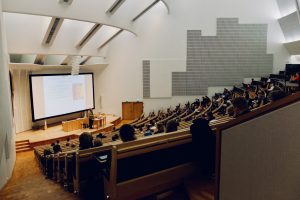
Conference on Alliances in Higher Education transformation
How boldly should we innovate European education? What transformational changes does higher education need to go through? Vytautas Magnus university (VMU) together with other Lithuanian higher education institutions would like to invite you to watch the online event “Higher education transformation: alliances as a strategic direction“. The event will be held online on the 9th of December, 9:00 – 12:30 (CET).

Social Remittances of (Re)Migrants for Society Welfare Growth
On Thursday 9 December, 5 p.m., a research presentation and discussion titled Social Remittances of (Re)Migrants for Society Welfare Growth will be held online. During the event, research will be presented which explores how (re)migrants - people who departed from the country after the 90s and have higher education – "give back" to their homeland. The study was conducted by the scholars at Vytautas Magnus University and Social Innovations Institute in Lithuania along with colleagues in Croatia, Poland, and the UK. Those wishing to participate are invited to register online.

A Tool for Hate Speech Detection on the Internet is Being Developed
As the number of online hate comments increases, artificial intelligence comes to the aid: researchers from Vytautas Magnus University (VMU), together with the Lithuanian Human Rights Center, European Foundation of Human Rights and the Department of National Minorities under the Government of the Republic of Lithuania are developing a tool that will help to automatically detect and remove cases of hate speech, for instance, in the comment sections of news portals. According to one of the project developers, Professor Tomas Krilavičius, Dean of the VMU Faculty of Informatics, the development of such a tool is quite challenging: people themselves often find it difficult to recognize hate speech, and artificial intelligence needs to be thoroughly trained to do so.

China and CEE International Cooperation: Strategies and Allocations
Centre for Asian Studies cordially invites participants from various academic disciplines of social sciences and humanities to participate at the scientific conference “China and Central and Eastern Europe International Cooperation: Strategies and Allocations”, which will take place online on 21 December, 2021.

Call for Applications: Conference Dedicated to Centenary of VMU
VMU Centre of Kaunas History invites everyone to participate in the 26th annual scientific and interdisciplinary conference dedicated to research on Kaunas titled Centenary of Vytautas Magnus University: Its Significance to the City and the State. The conference will take place on February 24-25th, 2022 at Vytautas Magnus University, marking the centenary of its inception. VMU was founded in 1922 and named after Vytautas the Great in 1930.

Human Rights Activists Are Being Locked Up in Psychiatric Hospitals
Have you shared a picture online mocking the authorities? Your bank account may be frozen and the court may order to place you in a psychiatric hospital. According to a report published by the foundation Human Rights in Mental Health (FGIP), such methods of silencing political opponents, religious believers, human rights activists and dissidents are still employed by the Russian authorities to this day, continuing the practices that began during the Soviet era. One of the authors of the report, Chief Executive of FGIP, Professor Robert van Voren of Vytautas Magnus University (VMU), says that psychiatry is a convenient cover for repressions against the critics of the authorities.