
VMU Graduate, AI Expert Milita Songailaitė: AI Can Be Highly Effective at Recognising Disinformation
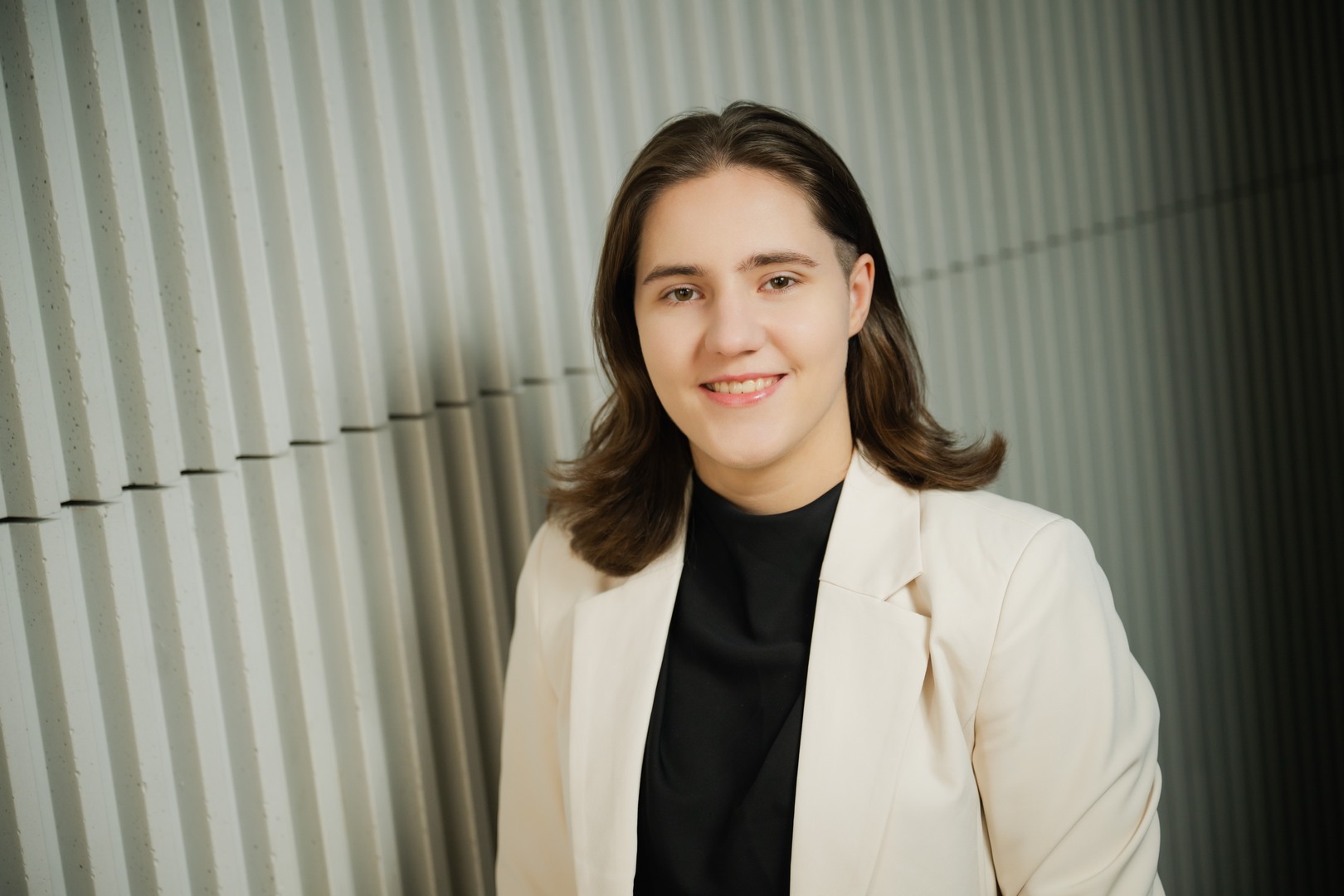
Milita Songailaitė
“One of the sadder discoveries was that if someone doesn’t want to know that they’re reading disinformation, then no model or artificial intelligence can help detect it. The person simply won’t believe it. In the research I’ve conducted, I’ve seen that this problem doesn’t end with the development of a model or the detection of disinformation. After that, you have to think of creative ways to inform the public. So we also work on educating the public, which is the biggest weapon against disinformation”, says Milita Songailaitė, graduate, PhD student, and research fellow of the Faculty of Informatics at Vytautas Magnus University whose research and activities are mostly focused on artificial intelligence solutions.
In the interview, the scientist discusses AI’s role in detecting disinformation, work in interesting start-ups, and memories of her studies, which she loved primarily for their flexibility and freedom.
Analysed 100,000 Messages in Russian Telegram Channels
As a PhD student at VMU, Songailaitė applies mathematical models and artificial intelligence while looking for disinformation in large quantities of data. One of the latest works she co-authored was an analysis of over 100,000 messages in nine Russian Telegram channels.
“The findings showed that disinformation was present across all analysed channels, especially about the downing of Flight MH17, various claims regarding Western assistance, and narratives surrounding occupied regions of Ukraine. We also identified the most effective methods of disinformation detection and demonstrated that knowledge graphs, or structured information networks, have a lot of potential in the analysis of large amounts of information“, VMU PhD student says.
Disinformation and its detection are becoming increasingly relevant and pressing issues. The Organisation for Economic Co-operation and Development (OECD) surveyed over 40,000 participants from around the world who were asked to identify real and fake content. Though many of them expressed confidence in their ability to discern disinformation, the participants succeeded in only 60 percent of the cases.
Songailaitė adds that AI can be highly effective at identifying false information: usually the statements that catch on are easily verifiable. However, naturally, everyone has encountered opinions or information whose veracity depends on interpretation.
“Sometimes even a specialist cannot say whether certain information is disinformation or not. In such cases, no model can learn that either. For instance, determining who is right in the Israel-Palestine conflict. Both sides have good arguments and drawbacks”, the interviewee notes.
Milita Songailaitė
Pessimism About AI in Education
Discussing the role of AI in education, Songailaitė claims that it can be a very useful tool, and she uses it herself to learn something new or discover a new technology. However, at the university, she tends to encounter more cases of different, less appropriate use.
“Usually, students take those tools not in order to learn something new but to do something more quickly or perhaps to cheat. Because of this, I look at artificial intelligence more pessimistically. But, in my opinion, a student who is able to use AI correctly should clearly outperform someone who cannot, especially one who uses those tools for cheating. I think that in the future the gap will increase between those who use AI correctly for learning and those who cheat”, VMU doctoral student muses, adding that, in her view, AI will have a negative impact on education in the future, thus the use of AI tools should be restricted.
Milita Songailaitė has also founded two start-ups where she applied knowledge of informatics and mathematics for interesting practical solutions. Abstract Music, founded six years ago, is a music recommendation system based on deep learning which recommends artists based on a person’s specific individual characteristics. Her more recent company, Tinic Solutions, is dedicated to a no less useful mission.
“We saw that there’s no database of restaurants, coffee shops and bars in Lithuania where all the dishes, seating, reservations, and all other required information would be listed. So we decided to collect it and create a recommendation engine. A free app is also planned”, artificial intelligence expert discusses her current activities.
Milita Songailaitė
Studies at VMU: Exceptional Flexibility and Freedom
At Vytautas Magnus University, Milita Songailaitė completed BA studies of Mathematics along with the minor of Informatics, followed by earning an MA degree in Applied Mathematics. However, Milita reveals that before graduating high school she was more interested in other fields.
“Right up until the 12th grade, I did not think that I would choose mathematics. I liked many things at the time. I was very interested in physics, programming, medicine, biology, and engineering. However, when I started analysing those fields more deeply, I saw that they all had mathematics. Later, in the 11th grade, I worked on a biology research project with a professor who was a mathematician by education. That was when I realized that I need to study it, because math is everywhere. I liked the freedom of being able to work with maths in any field that I want”, Songailaitė explains her choice.
The interviewee recalls that while studying at VMU she liked many of the teachers: they all had their own unique styles and taught their subjects effectively. The alumna specifies statistics as one of her favourites, because this field is closely related to her current activities. Moreover, the teacher had an engaging way of explaining not just how this science worked but also why.
Sharing her impressions of the university, Songailaitė notes that she likes an exceptional quality of VMU: the flexibility of studies and the principles of liberal arts (artes liberales) thanks to which every student can freely choose subjects of not just their specialization but also other fields, learn foreign languages, and participate in various student clubs or other activities.
“I most enjoyed the flexibility and the fact that you can design your own schedule for every semester. Also, I like the freedom of the people. When you talk to people from other universities and then to the VMU people, you can feel that their thinking is more open. That is a big plus”, the PhD student emphasizes, recalling that she really loved learning Arabic during her BA years. Currently, she finds participation in European international conferences, especially thanks to the Transform4Europe Alliance, which unites VMU and 10 other universities of the continent, particularly useful.
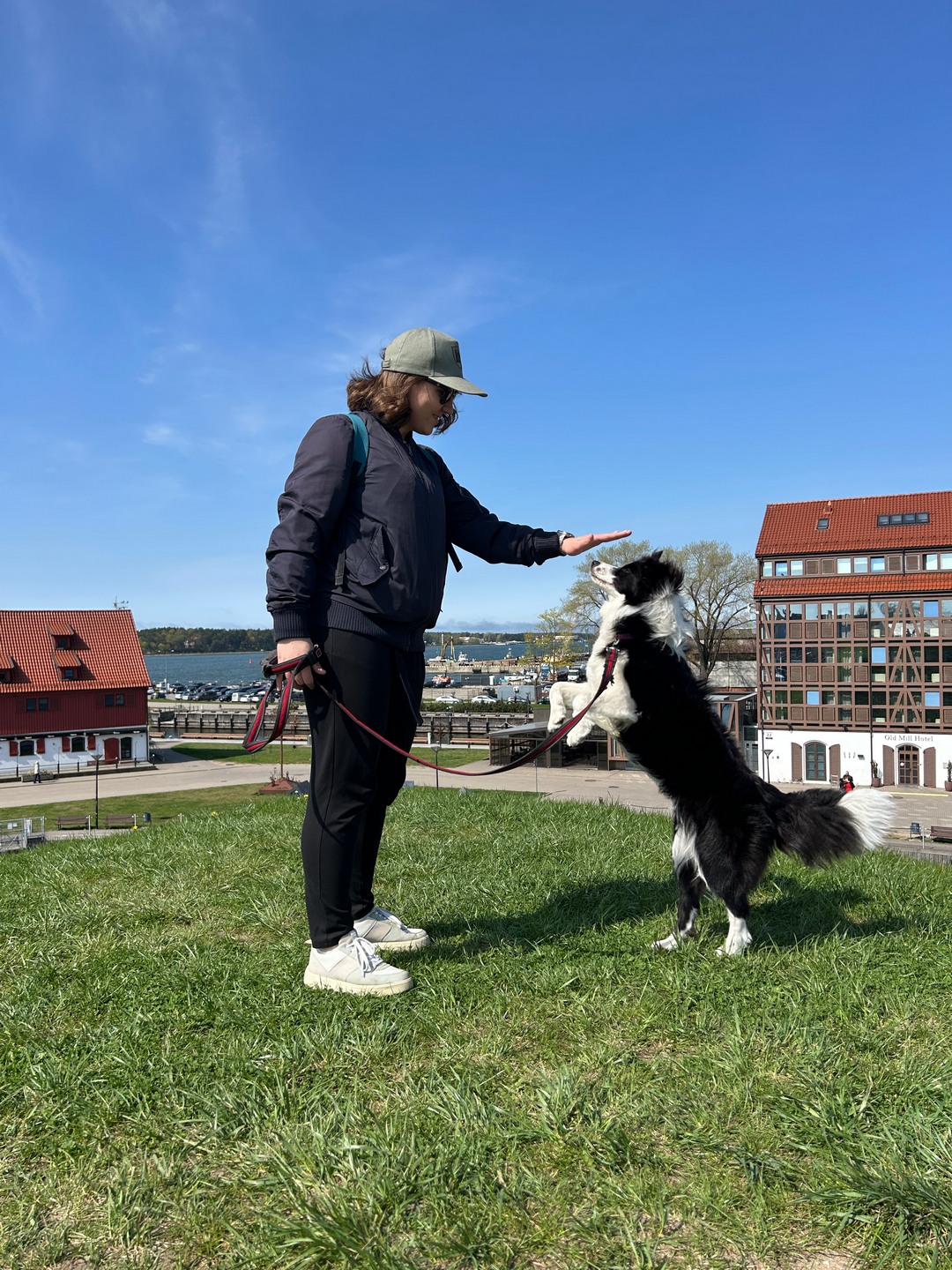
Milita Songailaitė
School Leavers Should Not Be Afraid to Set Goals
At the moment, Songailaitė is involved in various activities: she is not only a doctoral student but also works on various projects at the university and is a technical manager at a private company. Most of her work shares one goal: to build AI solutions for businesses and the academic sector. In her free time, the tech expert also tries to attend events related to her job. Currently she is particularly interested in defense and participates in conferences and working groups dedicated to the topic.
The VMU alum does not forget to relax, though she does not have much time for that. “I have a very active dog, Džinas, who drags me outside every day. I run, cycle, learn dog training. It’s a great way to recharge your brain. And when I really need to take a break, I enjoy snowboarding. To me, the snowboard is this kind of freedom, probably one the few sports where you can explore an entire mountain and you feel so free”, Milita Songailaitė elaborates.
Addressing the twelfth graders, who are deciding on which direction they should pick, Milita says they shouldn’t be afraid to set specific goals for themselves.
“Most of all, I wish for them to not waste the study years, because they are years when we don’t yet have many obligations but we are already adult enough to be able to look where to express and improve ourselves. So I really wish for them to set as many goals as possible for themselves and to pursue them persistently. Those goals don’t need to be “To earn top marks” or “To finish all tasks on time”. They can be more interesting: to meet more people, take part in projects or events, visit more countries. It doesn’t matter what the goal is. What I’ve noticed is, usually successful people are the ones who have set goals for themselves and are pursuing them”, VMU research fellow says.