
Mykolas Romeris University Joins the Lithuanian Consortium Collaborating with MIT
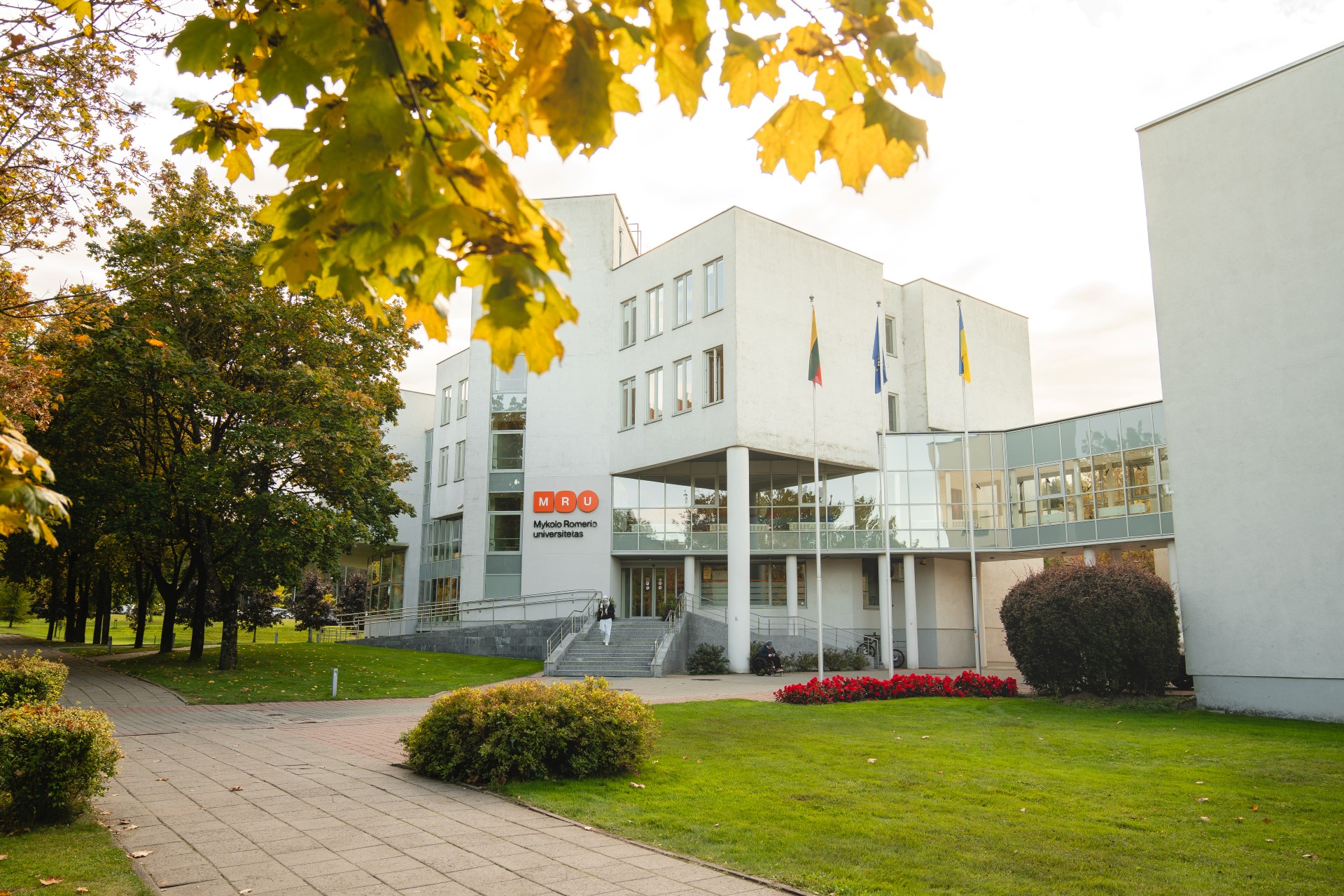
Mykolas Romeris University (MRU) has become the 14th member of the growing Lithuanian Consortium that brings together universities, research institutes, and business partners working in cooperation with the Massachusetts Institute of Technology (USA). This step reflects the consortium’s steady development and further strengthens its interdisciplinary partnership, combining technological research with expertise in the social sciences. Vytautas Magnus University is the consortium’s coordinator.
MRU joins the consortium with extensive experience in social innovation, law, public governance, artificial intelligence regulation, and cybersecurity. “Joining the Lithuanian Consortium in collaboration with the world-leading Massachusetts Institute of Technology is a strategic step that opens new opportunities for world-class research, innovation, and leadership,” says MRU Rector Prof. Dr. Inga Žalėnienė.
According to her, participation in joint activities with MIT will further enhance the university’s contribution to social innovation and help transform ideas more rapidly into advanced, responsibly applied technologies that benefit society.
“By engaging in a dynamic exchange of knowledge and scientific ideas, we are nurturing a new generation of researchers and innovators capable of working in an international environment while addressing shared challenges,” she adds.
The university’s involvement is viewed as an important opportunity to strengthen the synergy between social sciences and technology, and to integrate social science perspectives more closely into technological innovation — from artificial intelligence applications to public sector modernization and security solutions.
Consortium Growth as a Strategic Collaboration Process
The Lithuanian Consortium is being developed as a long-term platform enabling consistent cooperation with MIT in research, innovation, and education. Its expanding membership is expected to support the development of joint research projects, international fellowships, technology development, and stronger links between academia and industry.
Consortium coordinator Ina Žurkuvienė emphasizes that MRU’s accession is a strategically important step in uniting Lithuania’s higher education institutions toward a shared goal of strengthening the country’s role in the international science and technology landscape.
“One of our key priorities is strengthening interdisciplinarity. MRU’s participation will enrich technological innovation with social science insights that are essential for societal resilience and sustainable economic growth. The university’s expertise in AI law, cybersecurity governance, and public sector innovation is particularly valuable — both in collaboration with MIT and within the Lithuanian Consortium itself,” she notes.
A Long-Term Partnership for Future Initiatives
The Lithuanian science and business consortium currently includes fourteen members and serves as a national collaboration platform with MIT. It represents a strategic partnership connecting Lithuania’s innovation potential with world-class scientific and technological expertise, aimed at developing joint research, nurturing talent, and advancing innovation at the international level — delivering solutions relevant to both industry and the public sector.
Mykolas Romeris University is one of Lithuania’s largest social sciences universities, conducting education and research in law, public governance, public security, social technologies, and innovation. Its MRU LAB network of social innovation laboratories implements national and international projects, conducts commissioned research for business and the public sector, provides training, and offers consulting services to diverse groups across society.