
Founder of the Start-up “Freya Cultivation Systems” Dr. Gediminas Kudirka: Lithuania Is a Good Place to Build Science-based Businesses
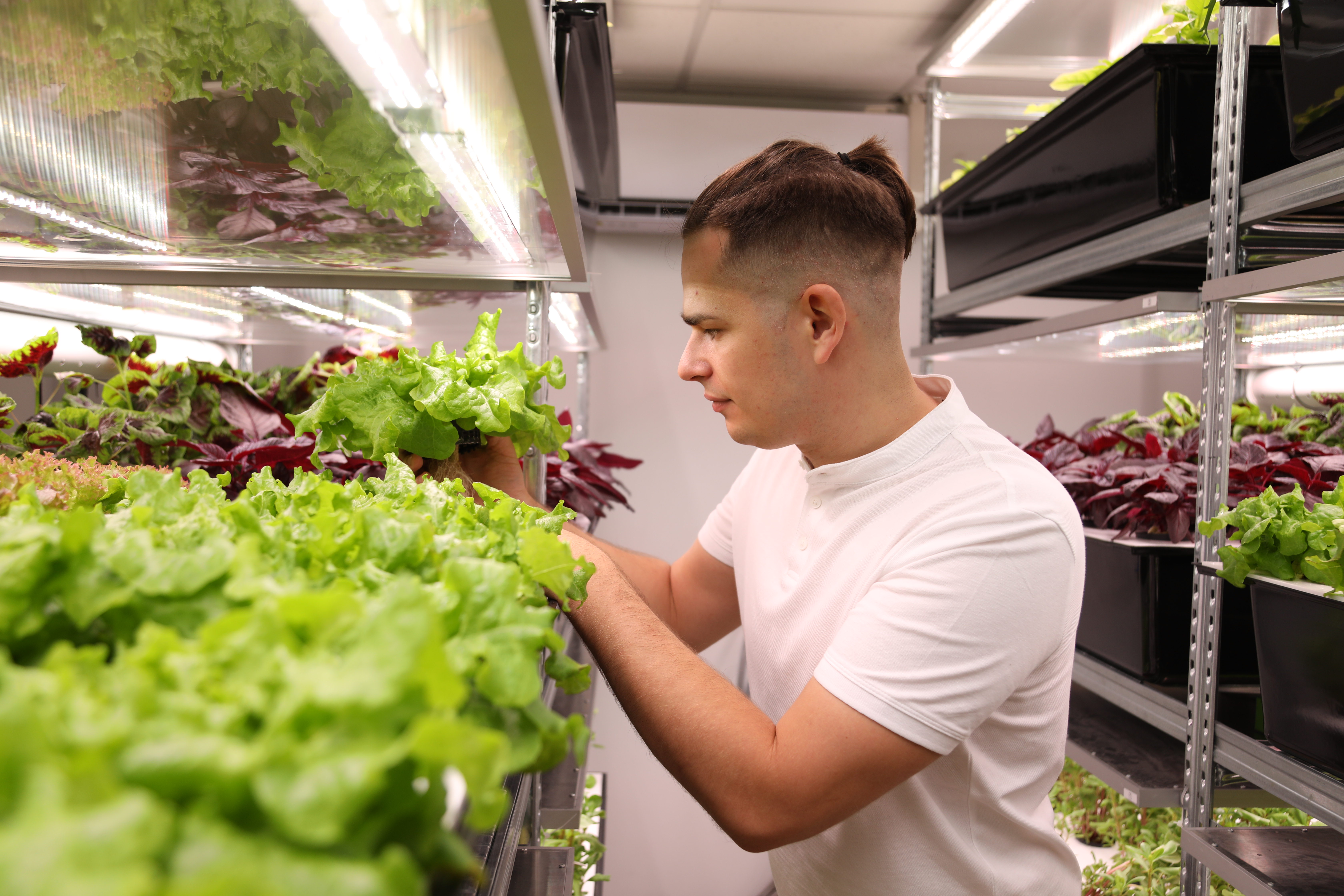
Dr. Gediminas Kudirka
“What’s the worst that could happen? We’ll just lose money.” These were the words Gediminas Kudirka, Doctor of Agronomy and an alumnus of Vytautas Magnus University (VMU), recalls saying over lunch at a fast-food restaurant with a coursemate – words that marked the beginning of the deep AgTech start-up “Freya Cultivation Systems”.
“The start-up emerged gradually. It wasn’t the outcome of lengthy research but rather a case of ‘let’s give it a try’. I’ve inherited a trait from my father: he says he’ll do something first and only then works out how to do it. It was much the same here. So we just went ahead and started it. It was my first year of master’s studies. Of course, the idea grew, changed, and evolved over time, but the start-up began during my studies,” Gediminas recalls.
Freedom, responsibility, and a turning point
As a child, the now Doctor of Agronomy had no clear idea of what he wanted to be when he grew up. But at school, he developed an interest in chemistry and biology. “I decided that these two fields could be combined. When you’re in your final year at school, you really have no idea what to expect from university studies, so I went online, read about biochemistry, liked it, and listed it as my second choice. My first choice was medicine, but I wasn’t admitted to a state-funded place, so I ended up studying biochemistry,” Gediminas says, recalling his journey into natural sciences studies at VMU.
“I liked VMU because of the freedom. In the Faculty of Natural Sciences, and in the university in general, there’s a great deal of freedom – you can do whatever you want. You attend lectures, you skip lectures, you organise and plan everything yourself – of course, that freedom also comes with responsibility, you still have to get your work done, but I appreciated that freedom to make decisions,” the alumnus recalls his study years, adding that he was also delighted with the teachers at the faculty, who maintained a collegial relationship with the students and allowed them considerable freedom in their studies.
Gediminas admits that his time at university had a bit of everything: there were periods of typical student life, including going to lectures on just a few hours’ sleep. “During the first two years, you could say I was enjoying student life more than studying. Later, there was something of a turning point, and I realised that I really needed to build up my knowledge, so I had to start balancing things,” the scientist recalls.
Knowledge and pragmatic solutions
Gediminas Kudirka is convinced that all knowledge and experience acquired in life prove useful: “There’s truth in the old saying that knowledge is no burden to carry. You never know when the knowledge you’ve accumulated will come in handy. I learnt many different things at university, and although it may seem that you will never use some of that knowledge, it often proves necessary, especially when creating something new.”
Dr. Gediminas Kudirka
In addition to the knowledge he gained, Gediminas also values the warm relationships he has maintained with his teachers from his time at university. “With Assoc. Prof. Lina Ragelienė from the Faculty of Natural Sciences, we used to talk not only about science, but about life as well, and we developed such a warm connection that even now we still meet at least a few times a year,” the alumnus recalls. Gediminas also recounts another rather comical situation involving Assoc. Prof. Ragelienė.
“When I started writing my first bachelor’s thesis, I knew nothing about the bacteria I was supposed to research. So I turned to Assoc. Prof. Ragelienė for help. And of course, she didn’t really have much time. But I knew she arrived at work at eight in the morning, and I figured she wouldn’t immediately dive into intense work. So I would also come in at eight and say, ‘Good morning, now let’s have a chat,’” Gediminas laughs. He describes the way he gathered the necessary knowledge for his bachelor’s thesis as a reminder that you have to learn to adapt and find a way to achieve your goals.
After completing his bachelor’s and master’s studies at VMU, Gediminas continued his academic path at the Lithuanian Research Centre for Agriculture and Forestry (LAMMC), this time in the field of agricultural sciences. “I didn’t think I would start doctoral studies so soon, straight after my master’s. I thought I would apply when I was 40 and had nothing better to do. But circumstances worked out differently. I enrolled in a doctoral programme in agronomy out of necessity.
During my studies, my colleague and I had started working with plants. We had already made some progress and had even won a competition and received funding, so we needed knowledge about plants – we were working with plants, but I knew nothing about them… So I entered the doctoral programme in agronomy purely out of pragmatic necessity – I needed knowledge, I needed access to infrastructure, and that’s how I ended up in doctoral studies,” the scientist explains.
A start-up born from an experiment
The idea to create the start-up “Freya Cultivation Systems” came up during the first year of Gediminas’s master’s studies. “My coursemate Salvijus and I were writing papers for Assoc. Prof. Ragelienė’s course, and since we were diligent students, we were offered the chance to try working on a request the university had received – to develop a particular method. So we gave it a go, worked out how to take samples, and carried out analyses that took about five minutes. In that time, there isn’t much else you can do, so we would simply wait and talk. During one of those conversations, Salvijus shared his idea, and since I had some savings, I was the one who said, ‘let’s do it,’” Gediminas recalls, explaining how the idea of growing plants in mist emerged, and adds that the first trials and the planning of the company’s activities took place in his room at his parents’ home.
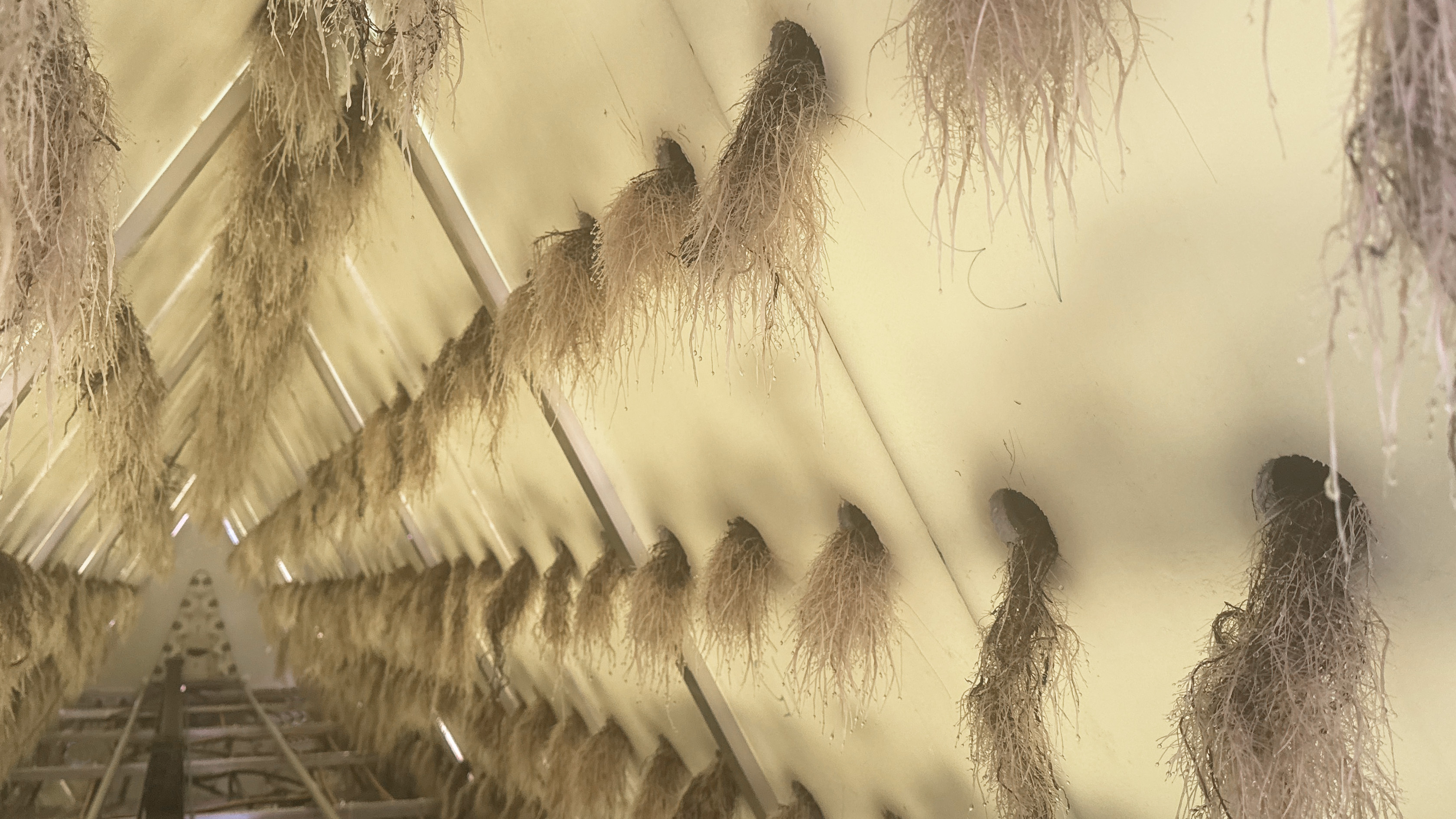
Gediminas describes the “Freya Cultivation Systems” approach as a principle of achieving more at lower cost. “‘Freya’ uses greenhouse growing space twice as efficiently. The plants are grown on triangular structures, which is a geometric advantage. Plants grown in this way need to be sprayed. To do this, we developed nozzles that avoid the industrial problems that existed previously – they don’t clog. The nozzles spray the plant roots at intervals, functioning like moving irrigation units,” he explains, adding that growing more within the same unit of space is a very simple idea that is not simple to implement.
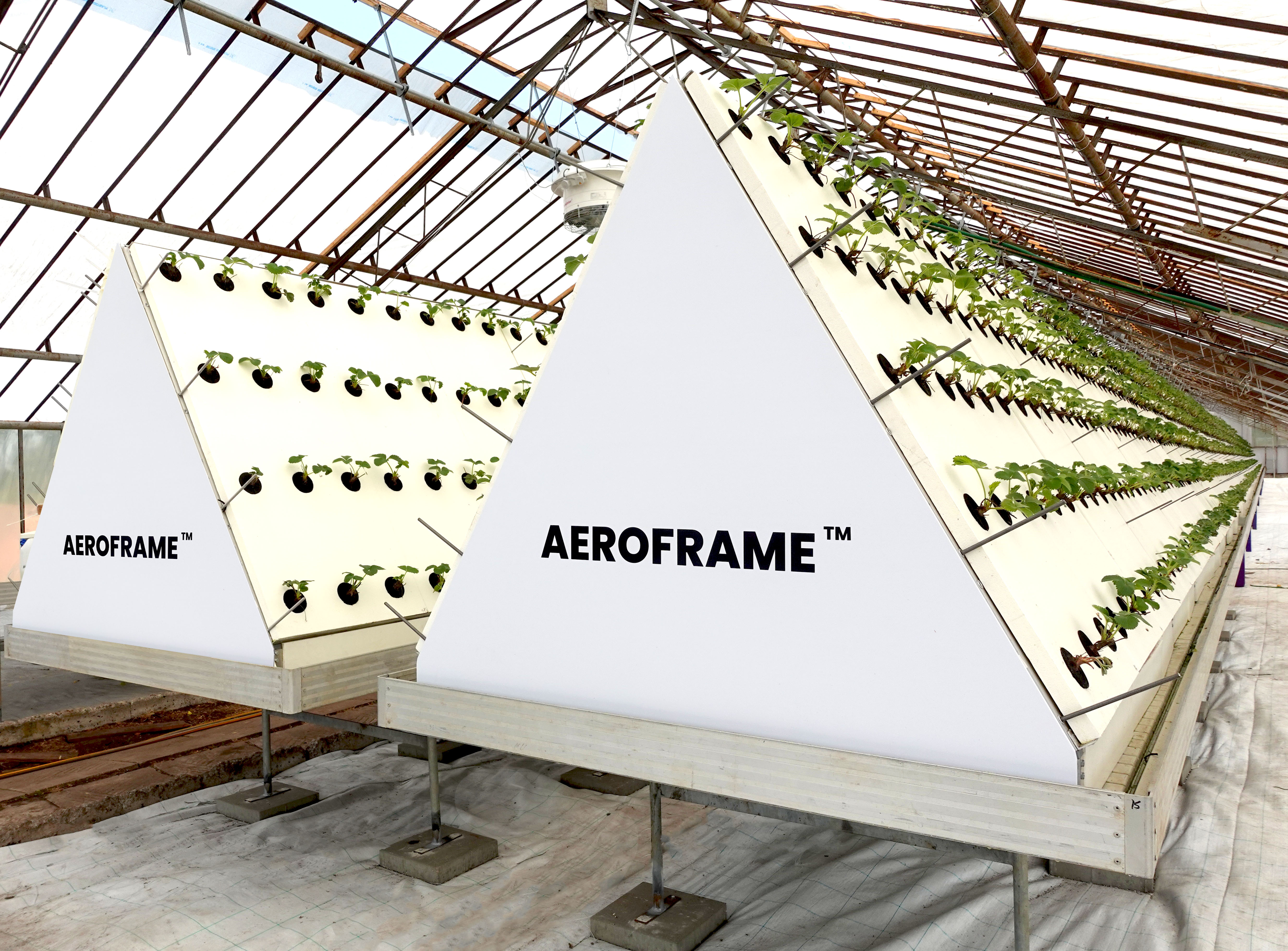
The scientist argues that our belief that plants can only be grown in soil is mistaken. “In commercial settings, plants have long since stopped being grown in soil. One of the main ways to grow plants is simply to supply them with water: by flooding or by dripping. Plants can grow in rockwool or in substrate. Soil is essentially unnecessary – it is merely a buffer in which plants live,” says Gediminas.
When asked about combining science and business, he notes that it is not easy, as usually one of these two areas still has to dominate, but it is possible to make it work, especially in a country that provides good “soil” for it: “Lithuania is a good place to create high value-added businesses based on science. We have the necessary human capital and infrastructure. In addition, we can obtain anything required for research from anywhere in the world relatively quickly. And on top of that, there are people who have the ‘hunger’ to take action and get things done.”
“Balancing everything is demanding, especially if you want to do everything to the maximum. In that case, you have to make sacrifices. I sacrificed a great deal of my time, or rather, I chose to do so: I worked every day and devoted long hours to work, so fatigue was inevitable,” Gediminas admits, speaking about the demands of responsible work in a deep AgTech start-up.
A return to the academic world
“I like the fundamental sciences, I like the academic world, and I like science as a discipline – searching, discovering, and researching. The research conducted may not be commercially useful straight away, perhaps it will be later, but exploring and doing things that genuinely interest me is something I’ve always enjoyed,” Gediminas says.
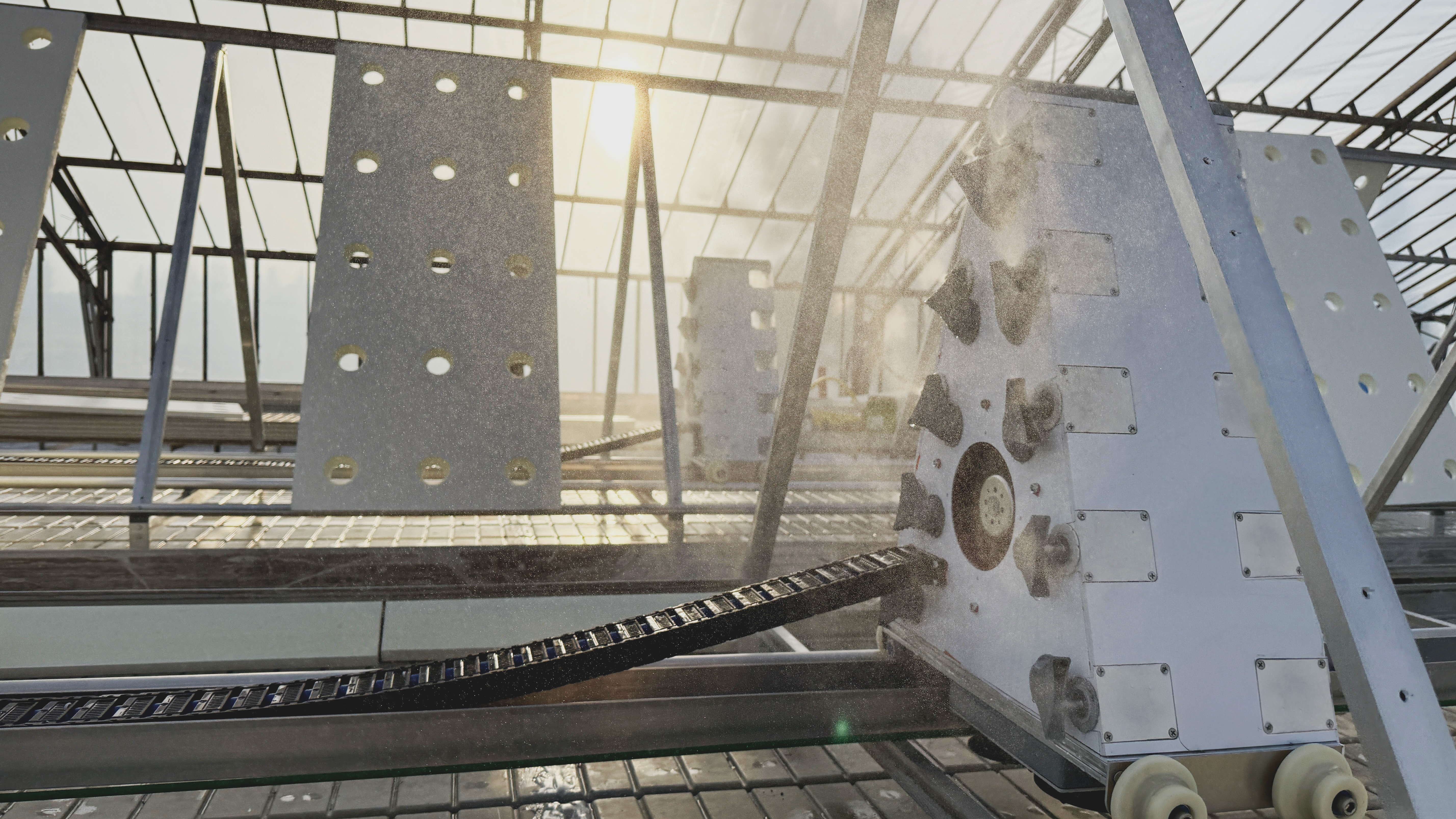
Mobile aeroponic irrigators with ultrasonic sprayers
His desire to return to the world of science and academia, together with the company’s current stage of development, in which the role of a fundamental scientist is not as necessary, led Gediminas to make the difficult decision to step back from the active operations of “Freya Cultivation Systems”: “I will remain with the start-up as a scientific consultant and a minority shareholder, but I am stepping back from active operations. I’m returning to science and will be focusing on plants at LAMMC.”
“While building and developing the start-up, I was simultaneously pursuing my doctoral studies, and after defending my dissertation, I realised how much I missed the scientific work. At this stage of my life, I don’t want to be chasing the start-up; I want to delve into science,” Gediminas smiles.
Speaking about the research areas that interest him, Gediminas mentions controlled-environment horticulture: “As the climate changes, it’s becoming increasingly difficult to grow sufficient produce using conventional commercial methods. We face droughts and heavy rain, so a lot of produce is lost. As a result, some production has to move into vertical farms or greenhouses.”
“But in greenhouses, the biological potential of plants is still not fully utilised. This means there is a need both for a more fundamental understanding of the plant itself and for the development and validation of new systems,” says Gediminas, discussing his future research plans. He adds that he is particularly interested in a deeper understanding of plant biology and the possibility of studying plants at the molecular level and enhancing photosynthesis processes, which in the future could prove more rewarding and create higher added value.
Prospects and broad horizons
When asked whether he would describe studies in the natural and agricultural sciences as offering good prospects, Gediminas says that any field of study can be promising if a person is willing to make the most of it. “A good specialist will always be in demand, whatever the field. What matters is that students are willing to get as much as possible out of their studies and then put that knowledge to good use,” he says, adding that, on the other hand, a degree does not necessarily determine the direction a person’s career will take.
In his view, the purpose of university is to broaden students’ horizons – the wider your perspective, the more you will achieve. “You might not end up working in the exact field you studied. Finishing a degree in biochemistry doesn’t automatically mean you’ll become a biochemist, but you do need to expand your knowledge. With knowledge, you can achieve great things.”
“To be honest, I never wanted to work in a laboratory and I never wanted to work with plants. Yet at one point in my life I set up my own laboratory and did just that, and now I’m returning to study them. It turns out I actually like plants and find them interesting,” Gediminas smiles.