“Disability Forum: Inclusive Higher Education 2025” – From Challenges to Opportunities in International Mobility
As the International Day of Persons with Disabilities, observed on December 3, approaches, Vytautas Magnus University (VMU) presents one of the results of the project “Disability Forum: Inclusive Higher Education 2025” – a video in which VMU students and alumni share their experiences of international mobility. Their stories reveal not only the challenges faced by students with disabilities when participating in international programs, but also success stories that inspire others to pursue new opportunities and gain international experience.
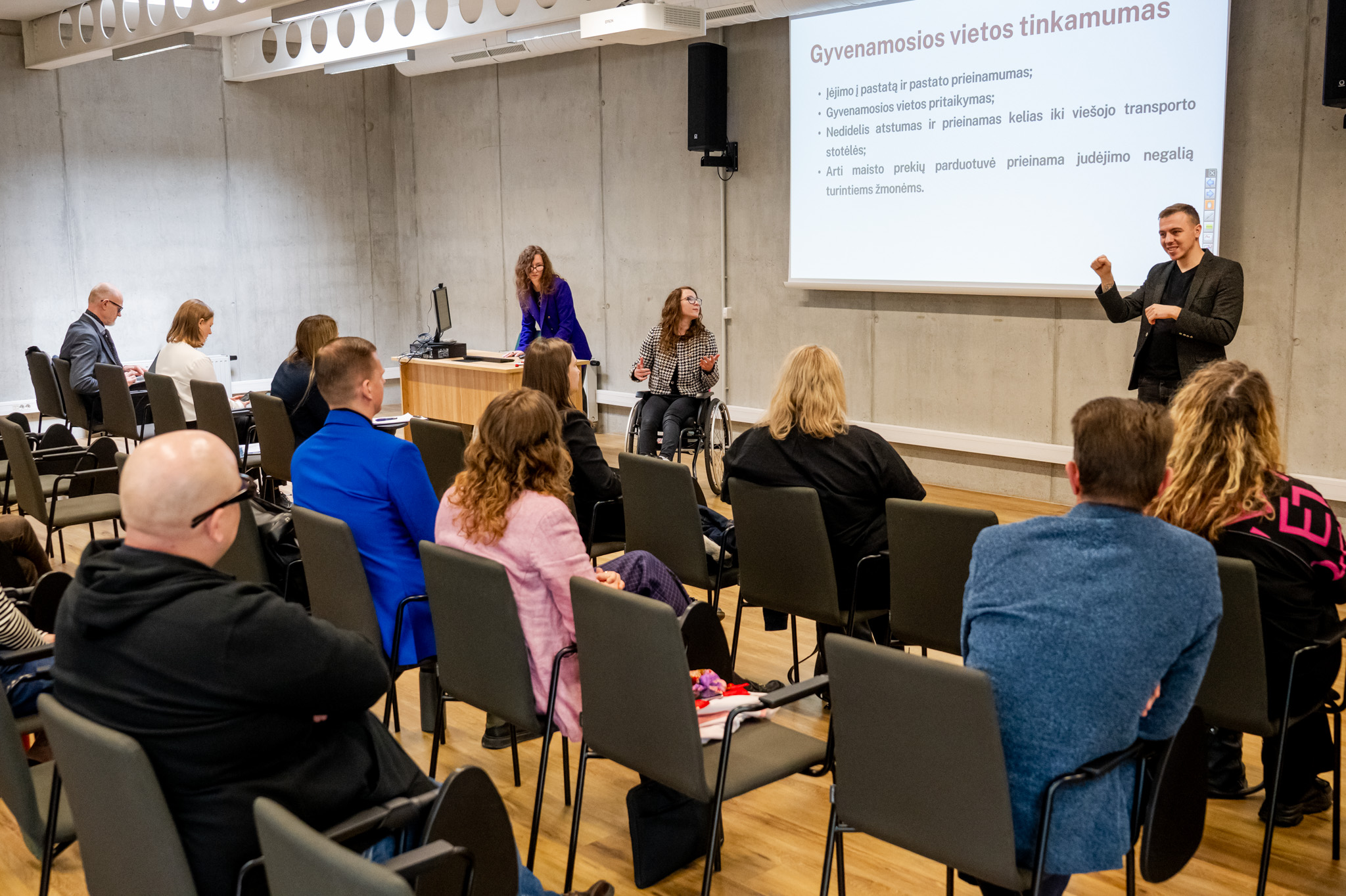
On 23 May, Vytautas Magnus University (VMU) hosted the fourth “Disability Forum: Inclusive Higher Education 2025” – an event that has become an important platform for discussions on accessibility in higher education. This year, the forum brought together higher education experts and students with disabilities for a joint conversation on the opportunities and challenges of international study mobility. The forum focused on what encourages or prevents students with disabilities from participating in mobility programmes, invited participants to share their personal experiences, and explored solutions that could foster greater inclusion.
The forum opened with welcoming remarks from Vice-Rector for Communication (who served in the position until October 2025) Vilma Bijeikienė, who emphasized that VMU is committed to fostering a university environment in which all students – regardless of their diverse abilities – have equal opportunities to participate in international exchanges and learning programmes.
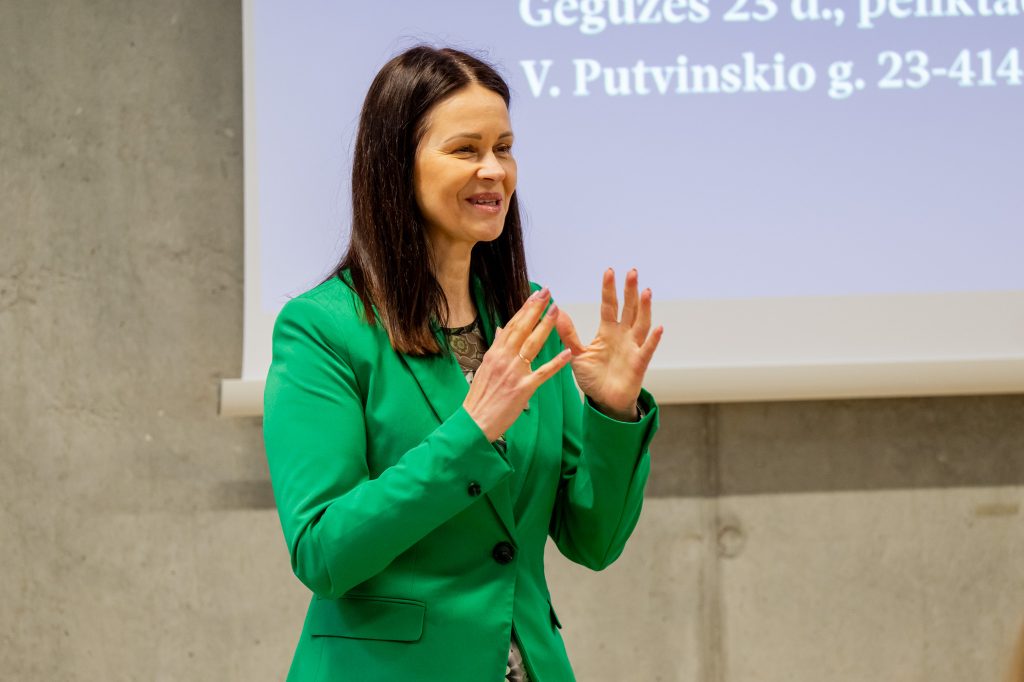
Assoc. Prof. Dr. Vilma Bijeikienė
Professor Jonas Ruškus, VMU professor and former Vice-Chair of the UN Committee on the Rights of Persons with Disabilities, also opened the forum. He highlighted the need to ensure reasonable accommodation—in line with the UN Convention on the Rights of Persons with Disabilities, particularly Articles 9 and 24—so that the infrastructure supporting international study mobility is fully accessible. He stressed that only by doing so can we guarantee equal opportunities for all students with disabilities.
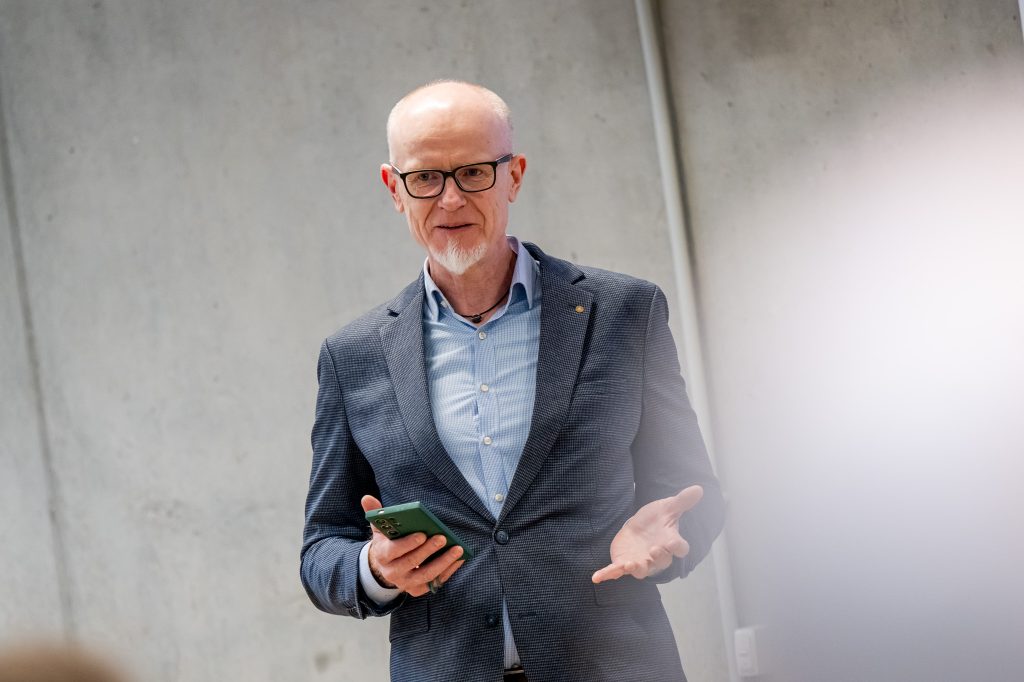
Prof. Dr. Jonas Ruškus
In her opening remarks, Miglė Janušauskaitė, VMU Disability Affairs Coordinator, noted that the percentage of students with disabilities who participate in international mobility remains significantly lower than that of students without disabilities. This is a cause for concern and indicates the need to identify additional solutions and support measures to ensure their inclusion.
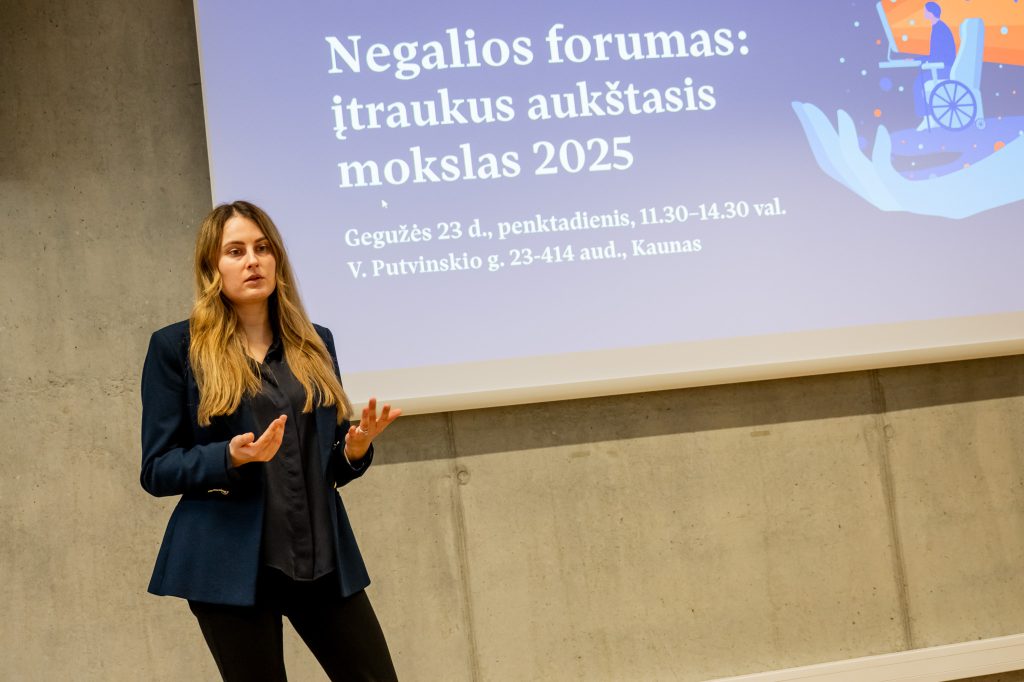
Miglė Janušauskaitė
In the introductory speech of the forum, Indrė Širvinskaitė, President of the Lithuanian Forum for Disability Organisations and moderator of the event, underlined the importance of hearing and understanding the perspectives of students with disabilities regarding international study mobility.
“Official data shows that students with disabilities make up only 0.3% of all students in the country. However, most of us here would agree that this number does not reflect reality. That is why I am glad that we now have consolidated data from the 8th Eurostudent survey, which helps us better understand the situation: as many as 13% of students report that their disability or health condition significantly limits their ability to study, 36% say it limits them to some extent, and only 51% state that their opportunities are not limited at all. This shows that a large number of students still do not receive the support they deserve,” Širvinskaitė said.

Indrė Širvinskaitė
In the first part of the forum, various presentations were showcased, covering both the experiences of students with disabilities in international mobility programs and broader challenges of inclusion in higher education. Representatives of the Lithuanian Student Union, Paulius Vaitiekus and Gabija Juzėnaitė, discussed the principles of barrier-free mobility and the perspectives of European and Lithuanian student unions. VMU students and alumni, Kęstutis Vaišnora, Augustė Paulauskytė, and Irma Jokštytė-Stanevičienė, shared their personal experiences participating in international study exchange programs. Their stories highlighted not only the joys of traveling but also the challenges they faced along the way.

Paulius Vaitiekus and Gabija Juzėnaitė
Kęstutis Vaišnora spoke about his doctoral internship at Gallaudet University in Washington, D.C., USA. This is the first higher education institution in the world where deaf students can learn using sign language. “Gallaudet University was my dream. But I had no other choice: there is no other university in the world designed for someone to communicate entirely in sign language. When I arrived, I realized that, for the first time in my life, I had been nervous for no reason.” He appreciated being able to communicate solely in sign language during the month-long internship, without using a hearing aid, his voice, or lip-reading. However, he also highlighted the complex and stressful bureaucratic process involved in handling official documents.

Kęstutis Vaišnora
Augustė Paulauskytė shared her experience of searching for a suitable university: “It took me three months. But VMU was a great help: I contacted the Erasmus+ mobility coordinator, and she helped me find the most suitable university, because when I looked for information on my own, it was difficult to find and access everything.”
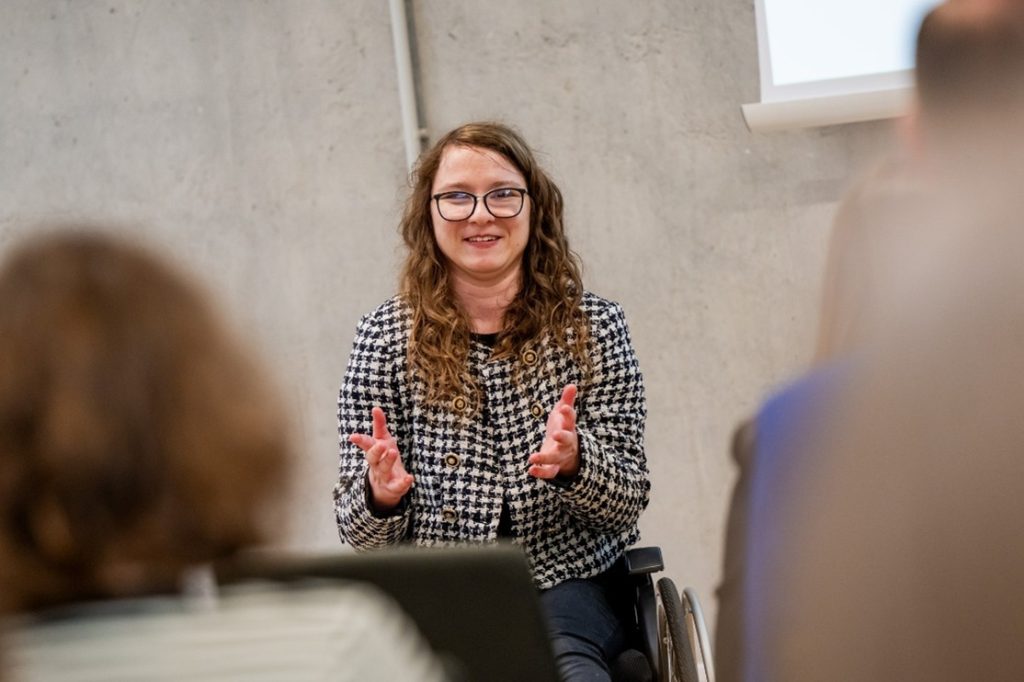
Augustė Paulauskytė
The importance of information was also highlighted by Irma Jokštytė-Stanevičienė, who has a visual impairment, noting that support is especially crucial during the first weeks, while getting familiar with the environment and learning to navigate a new country and system. Despite potential challenges, Irma firmly stated that she never doubted whether participating in exchanges was worth it: “I never questioned whether I would go on an exchange. I wanted to participate in Erasmus+, bilateral exchanges, and even an internship. I even felt it was a pity that there are so few opportunities to go abroad. I never wondered if I would go; my main question was when and where.”
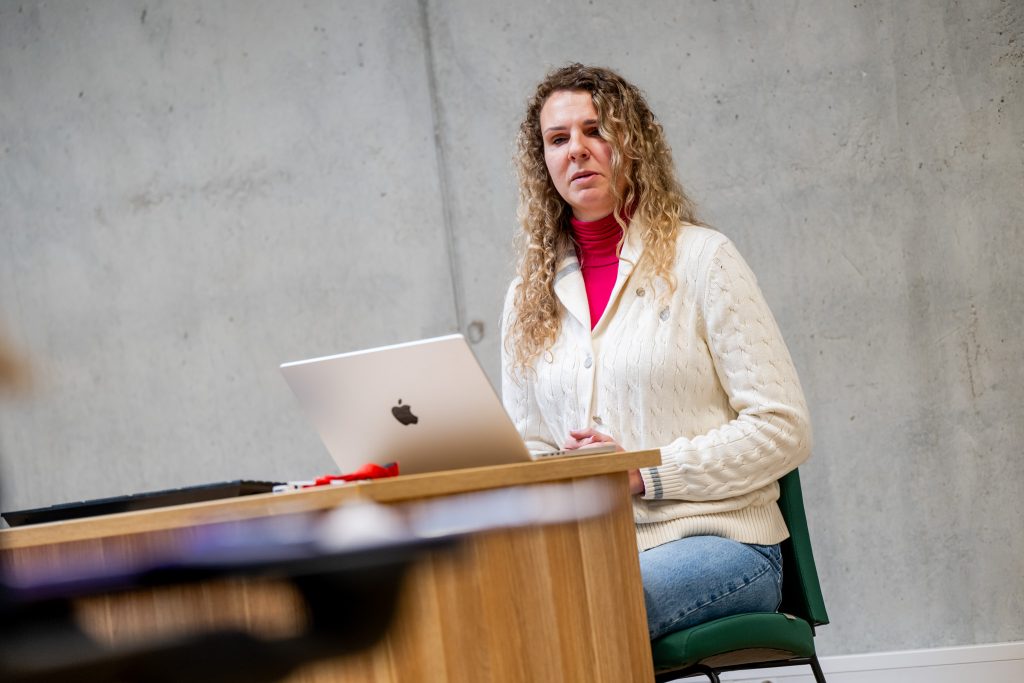
Irma Jokštytė-Stanevičienė
Dr. Gintė Martinkėnė, a researcher at the Faculty of Philosophy at Vilnius University, presented the interim findings of the “Inclusion+” project. The results analyse the challenges faced by students with disabilities or caregiving responsibilities when participating in Erasmus+ mobility programs, as well as possible solutions to enhance the inclusion of these students.
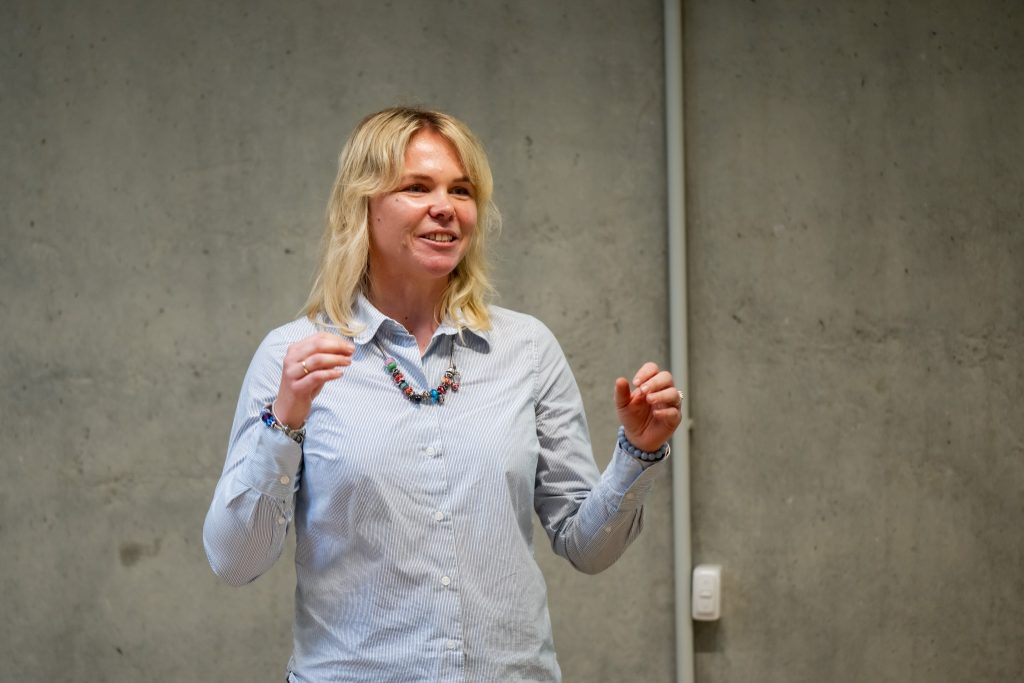
Dr. Gintė Martinkėnė
In the second part of the forum, attention was given to expert presentations outlining the current situation, specific support, and initiatives that encourage greater participation of students with disabilities in international mobility programs, as well as the ongoing challenges in enhancing their inclusion.
Monika Skaringaitė, Head of the Higher Education Mobility Projects Department at the Education Exchanges Support Foundation, highlighted in her presentation the additional financial support opportunities available to students with disabilities or special needs, encouraging them to take advantage of the offered assistance, including travel and living expense reimbursements, coverage for accompanying persons, and more.
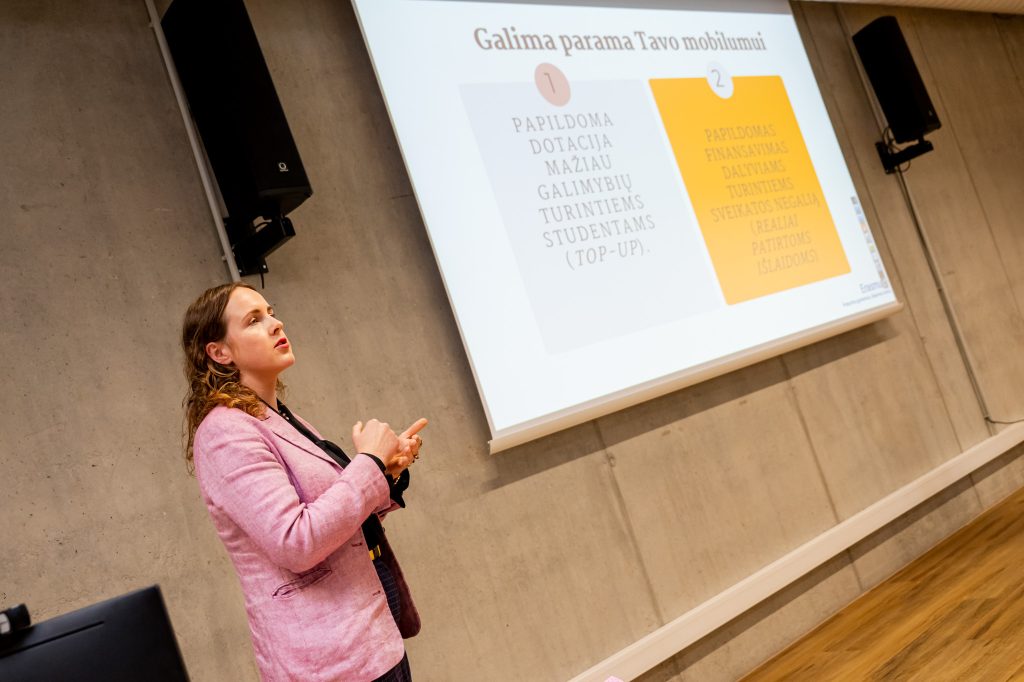
Monika Skaringaitė
Representatives of the VMU International Relations Department, Gabrielė Damijonienė and Monika Lisauskaitė, presented practical steps on how to start planning for an Erasmus+ mobility and what to pay special attention to for smooth preparation. The speakers highlighted the importance of starting the document process as early as possible to avoid stress and complications. All necessary information is clearly and thoroughly provided on the VMU website, including details on what support students are entitled to and what documents need to be submitted to access it. It is especially important to communicate your needs in advance – only by knowing what support is required can the International Relations Department staff assist in contacting the host institution and ensure smooth preparation for mobility.
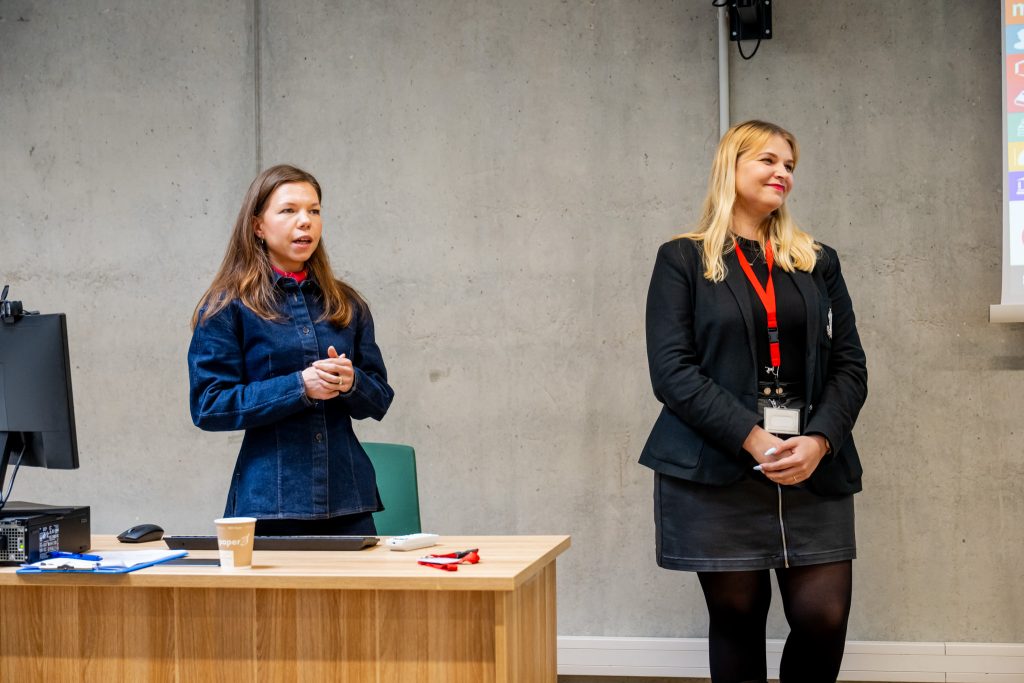
Gabrielė Damijonienė and Monika Lisauskaitė
At the end of the forum, the international perspective was presented by Àngel Asins, a technician in the University Programs and Youth Talent Promotion Department at Spain’s ONCE Foundation. In his presentation, “The Power of Alliances for Inclusive International Mobility: Achievements and Challenges,” he discussed the importance of cross-border partnerships for creating an inclusive international student mobility system and shared best practices as well as the challenges faced by higher education institutions across Europe.
Indrė Širvinskaitė, President of the Lithuanian Disability Organizations Forum and moderator of the event, summarized the day’s insights at the end of the forum, drawing attention to the key challenges and opportunities for inclusive international exchanges. According to her, one of the essential issues is ensuring that students do not lose state-provided support when participating in international mobility programs. Currently, the dissemination of this information varies across European countries, so a more unified strategy at the European Union level is needed, along with strengthened financial support for students with disabilities.
Significant attention should be given to data collection – currently, statistics on students with disabilities are gathered in a fragmented way, making it difficult to accurately assess the situation and plan appropriate measures. Equally important is the search for a suitable university and the accessibility of information, where the support of the sending university plays a crucial role. Although challenges such as non-adapted infrastructure or bureaucratic obstacles still exist, many solutions can be achieved through close collaboration with university staff – the involvement of international relations and disability coordinators can have a decisive impact on a student’s decision to participate in mobility programs.
Among the proposed solutions were individualized needs assessments, mentorship programs, surveys, video lectures, and even videos about infrastructure, helping students to visualize their future study conditions. Attention was also drawn to the flexibility of terminology and definitions – not all students with individual needs identify as having a disability or wish to be labelled as such, and therefore may sometimes refrain from seeking support.
The discussions and presentations at the “Disability Forum 2025” clearly demonstrated that support for students with disabilities in the context of international mobility is indeed provided; however, its effectiveness greatly depends on how actively university communities are involved. The support of international relations and disability coordinators, students’ courage, and clear, detailed information can make participating in exchange programs not only possible but also a positive life experience.
The project “Disability Forum: Inclusive Higher Education 2025” was funded by the State Studies Foundation.
Throughout the event, all presentations were interpreted into Lithuanian Sign Language